Congo River Biotope: An Underrated African Ecosystem
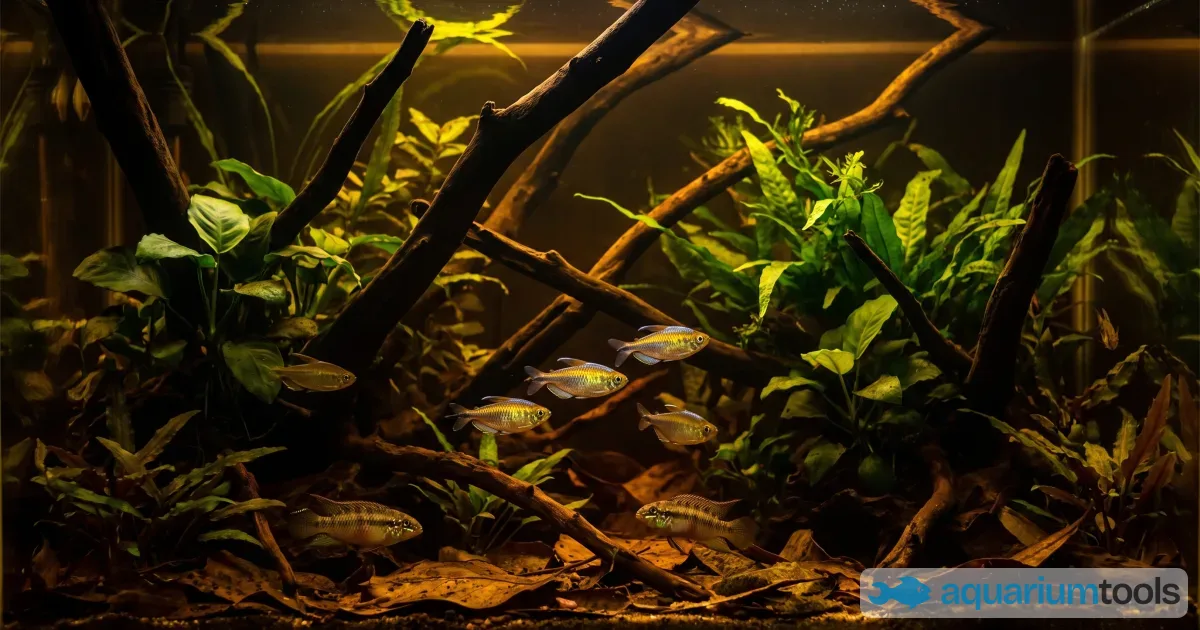
When people talk about African aquariums, their thoughts almost always turn to the great lakes of the Rift Valley: Malawi with its brightly coloured Mbuna and Tanganyika with its specialised cichlids. Yet the African continent offers a very different environment, equally fascinating and decidedly underrated: the Congo River basin. This is a complex river ecosystem, shaded by the rainforest, dominated by soft, slightly acidic waters, a far cry from the hard, alkaline waters of the lakes. Let's look at how and why it's worth recreating.
An environment unlike anything else in aquarium-keeping Africa
The Congo River is the second longest African river and the deepest in the world. Its basin runs through the equatorial rainforest, an environment where light struggles to filter through the vegetation and the water flows laden with organic matter. Unlike the Rift lakes, here we don't find stratified rocks and colonial walls of territorial cichlids, but a world of tangled roots, submerged trunks and beds of decomposing leaves.
This makes it a relatively simple biotope to interpret from an aesthetic point of view, yet rich in nuance chemically and biologically. Those coming from an Amazonian aquarium will find many similarities, albeit with completely different species.
Water characteristics
The water of the Congo basin, especially in its forest tributaries, tends to have well-defined parameters. Recreating them in the tank is the key to the animals' wellbeing.
- Slightly acidic pH: generally between 6.0 and 7.0, with more acidic peaks in tributaries rich in tannins.
- Low hardness: soft waters, with limited GH and KH, typical of environments fed by equatorial rains.
- Amber colouration and slight turbidity: the decomposition of wood and leaves releases tannins and humic substances that darken the water.
- Temperature: stable and warm, roughly between 24 and 27 degrees, consistent with the equatorial climate.
The presence of tannins is not just aesthetic: these substances have a mild antibacterial and antifungal action, help lower the pH and recreate the soft, diffused lighting conditions these fish are used to.
The typical décor of the biotope
The aesthetic of the Congo biotope is dominated by wood. The goal is to reproduce the bed of a forest river, where fallen branches and tree roots create a network of hiding places.
Main elements
- Tangled roots and wood: these form the backbone of the layout. They should be arranged to create shaded areas, nooks and overlaps, not as single isolated pieces.
- Leaf litter: dried leaves such as catappa or oak reproduce the natural bottom and release useful tannins. As they decompose, they also provide microfauna for the fry.
- Dark, sandy substrate: a fine, dark substrate accentuates the fishes' colours and imitates the sandy, muddy riverbed.
- Little vegetation: in many forest stretches the light is insufficient for lush flora. If you want to add plants, it's best to opt for shade-tolerant species such as Anubias or Bolbitis, which in the wild colonise wood and rocks along the banks.
The result is an aquarium with an intimate, natural atmosphere, very different from the brilliant visual impact of a Malawi tank.
The iconic fish of the Congo basin
The Congo's fauna is surprisingly varied. Here are the most representative categories suited to the aquarium.
Congo tetra
The Phenacogrammus interruptus, known as the Congo tetra, is probably the most famous ambassador of this ecosystem. It's a medium-sized characin, with an iridescent body ranging from blue to orange and fringed dorsal and caudal fins in adult males. It's a schooling fish: it should be kept in groups of at least six to eight specimens in spacious tanks, where it best displays its swimming and colours.
Congo dwarf cichlids
The basin is home to dwarf cichlids less well known than their South American cousins but equally interesting. An emblematic genus is Nanochromis, with species that live in the river stretches and display marked sexual dimorphism and vivid liveries. They are bottom-dwelling fish, territorial during breeding, that appreciate crevices among wood and roots as spawning sites. They require soft, acidic water to breed successfully.
Catfish
Among the catfish, the genus Synodontis is a typical presence in African waters, including the Congo basin. They are robust catfish, often active during twilight hours, occupying the lower part of the tank and appreciating the numerous hiding places offered by the wood. Some species have the curious habit of swimming upside down. They should be chosen carefully because sizes vary greatly between species.
The challenges of availability
And here we come to the sore point. Many authentically Congolese species are difficult to find in the aquarium trade, and this is one of the main reasons why the biotope remains uncommon.
The reasons are various:
- A good part of the imports depends on wild-caught fish from remote and logistically complex areas.
- Many African dwarf cichlids are not bred on a large scale like their South American counterparts, so availability is intermittent.
- Species identification is sometimes uncertain, with specimens sold under generic or imprecise commercial names.
The practical advice is to always check the origin and, when possible, opt for captive-bred specimens, which are more robust and adapted to the tank's parameters.
Easier-to-find alternatives
If the goal is to recreate the atmosphere and conditions of the biotope without chasing rare species, you can work on several levels.
- Congo tetra: it's the most widespread species of the basin and is bred regularly, so it represents the ideal starting point and is always available.
- Farmed Synodontis: some commercial species and hybrids are found with relative ease and reproduce well the ecological role of bottom-dwelling catfish.
- West African dwarf cichlids: the famous Pelvicachromis pulcher (the Niger parrot fish) is not strictly Congolese, but it shares similar needs for soft water, hiding places and a shaded environment, and it's far more widely available in shops.
An honest solution is to distinguish between a strict biotope, which admits only species actually present in the basin, and a Congo-style aquarium, which aims to reproduce the parameters, atmosphere and ecological structure with more accessible species. Both approaches are valid, as long as the intent is clear.
In summary
The Congo River biotope is a fascinating and little-explored alternative to classic African setups. It requires soft, slightly acidic water, a layout dominated by tangled wood and decomposing leaves, subdued lighting and little vegetation. The main challenge remains the availability of many native species, but with Congo tetras, farmed catfish and West African dwarf cichlids it's possible to build a coherent, elegant tank full of personality. An ideal project for those seeking something different from the usual Rift lakes, without giving up charm and authenticity.
Keep reading
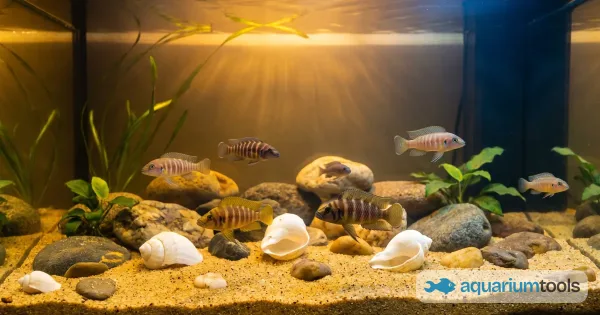
Lake Tanganyika biotope: sand, shells and unusual cichlids
A guide to the Lake Tanganyika biotope: alkaline, hard water parameters, typical rock and shell setups, and the fascinating behaviour of Shell Dweller cichlids.
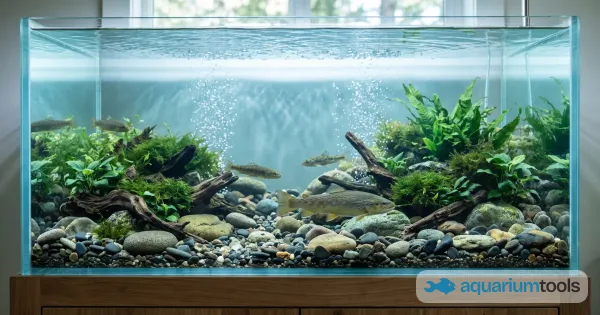
European Stream Biotope: Setting Up an Aquarium With Native Fish
An uncommon yet fascinating approach: recreating a European stream in an aquarium with fresh, well-oxygenated water and often overlooked native species. Here's how to set it up correctly and in compliance with regulations.
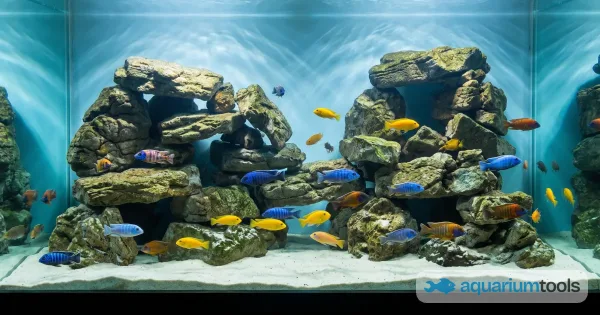
Lake Malawi Biotope: Rocks, Cichlids and Hard Water
A practical guide to recreating the Lake Malawi environment in your aquarium: alkaline, hard water, a rockscape with caves, pale sand and a selection of Mbuna and Peacock cichlids, with the rules for managing aggression and stocking.
All material on this site is protected by copyright. Partial or total copying and republishing without authorization is not allowed.
Comments
Join the conversation
Create a free account to leave a comment. It only takes a minute and you'll come right back here.
No comments yet. Be the first to share your experience.