Caribbean Biotope: Corals and Fish of the Tropical Atlantic
Introduction: the Atlantic you don't expect
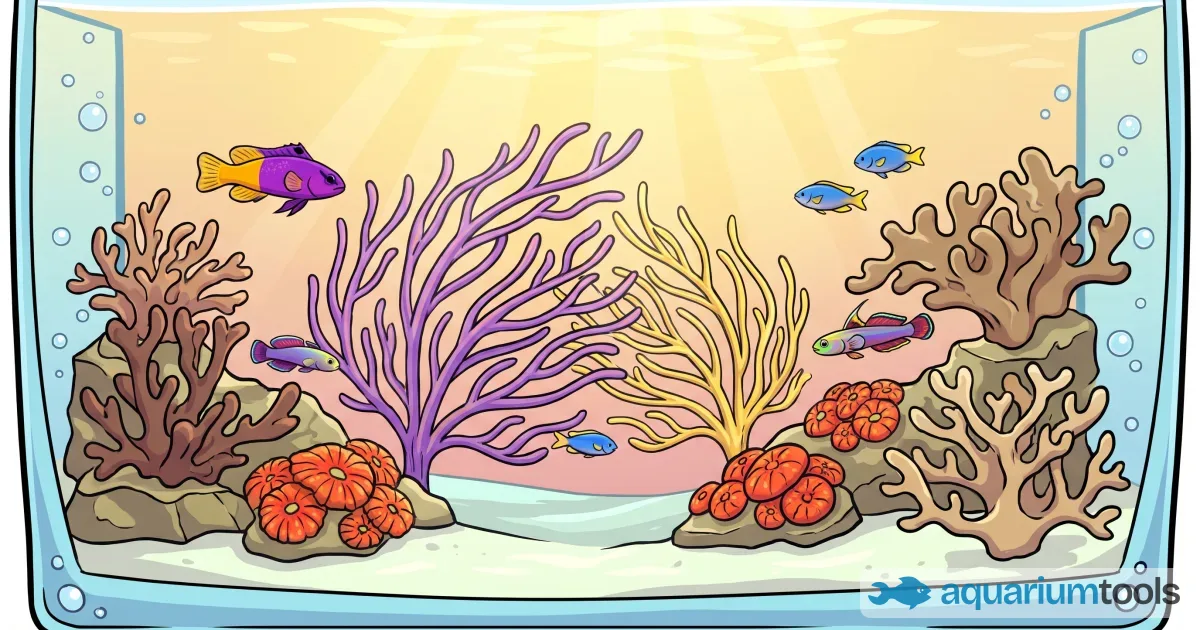
When people think of a coral reef in an aquarium, the imagination runs straight to the Acropora gardens of the Indo-Pacific, with their fluorescent colours and branching structures. Yet there is an equally fascinating marine world that is far less frequented by aquarists: the Caribbean and tropical Atlantic reef. The Caribbean Sea offers a radically different aesthetic, dominated not by hard corals but by photosynthetic gorgonians, which move like an underwater forest to the rhythm of the current.
The visual contrast is immediate. Where the Indo-Pacific presents rigid, motionless surfaces covered in SPS, the Caribbean biotope delivers dynamism and movement: fans and whips that sway, broad expanses of pale sand and the lively personality of a fish fauna waiting to be discovered. It is an aquarium with a different soul, often more tolerant and manageable.
Direct comparison: Caribbean reef vs Indo-Pacific reef
Before going into detail on the organisms, it is worth comparing the two ecosystems according to the parameters that matter most to anyone setting up a tank.
| Criterion | Caribbean / Atlantic reef | Indo-Pacific reef |
|---|---|---|
| Overall biodiversity | Lower total number of species | Enormous species richness |
| Prevailing corals | Photosynthetic gorgonians, softs, some brain LPS | Acroporid SPS, numerous LPS |
| Layout dynamics | Constant movement, swaying branches | Rigid, static structures |
| Iconic fish fauna | Gramma loreto, Elacatinus, Centropyge argi | Clownfish, surgeonfish, various Centropyge |
| Protection and availability | Several protected, non-tradable species | Wide commercial supply, including from mariculture |
Corals and submerged botany of the Caribbean basin
Photosynthetic gorgonians
These are the true stars of the Caribbean reef. Genera such as Plexaura, Pseudopterogorgia and Eunicea dominate the landscape with their branches waving in the current. Their great appeal, beyond aesthetics, is their ease of care: many species host zooxanthellae and draw energy from photosynthesis, reducing the need for targeted feeding.
They require a moderate but constant and turbulent water flow, essential to keep the polyps clean and to encourage the branches to sway. Lighting should be good but not extreme: we are not at the intensity levels required by SPS. Pay attention to keeping the surface of the branches clean, as it tends to become covered in filamentous algae if the current is insufficient.
Characteristic hard corals
The Caribbean basin is home to splendid brain corals, such as Pseudodiploria and Colpophyllia, with their cerebriform meanders. Also widespread and appreciated is the so-called Caribbean mushroom coral, Ricordea florida, a corallimorph with uniform spherical tentacles and colours ranging from orange to fluorescent green.
It is essential not to confuse it with Ricordea yuma, an Indo-Pacific species that has less regular tentacles and a different morphology. In a coherent biotope setup, only Ricordea florida has full rights of citizenship.
Supporting flora
To enrich the layout and make it believable, you can integrate calcareous and decorative macroalgae typical of the Caribbean, such as Halimeda, with its calcified segments, and Penicillus, which looks like a small brush. Beyond their aesthetic value, these algae take part in nutrient absorption and recreate the atmosphere of Atlantic seagrass meadows and sandy bottoms.
Layout, hardscape and water parameters
Caribbean rockscaping favours vertical formations, isolated pinnacles and coastal reefs, alternating with broad sandy bottoms that simulate the meadows of Thalassia testudinum. Leaving open stretches of sand is not just scenic: it faithfully reflects the real morphology of these environments.
The ideal substrate is pale aragonite sand, fine or medium, which restores the brightness typical of Caribbean waters and helps to stabilise pH and alkalinity.
The reference chemical and physical parameters are those of a healthy tropical sea:
- Temperature: 24-26 °C
- Salinity: 35 parts per thousand (SG about 1.025-1.026)
- pH: 8.1-8.4
The water flow deserves a special mention: it must be moderate but well diffused, so as to gently sway the gorgonian branches without stress. Wavemaker pumps with wide, alternating flow are the best choice.
Selecting the fish fauna and care sheets
Grammatids and basslets
The Gramma loreto (Royal Gramma) is perhaps the signature Caribbean fish in the aquarium. Its two-tone livery, purple at the front and yellow at the rear, is unmistakable. It is a territorial but peaceful fish that loves crevices and small caves to hide in, often swimming upside down along rocky walls. It is also ideal for modest-sized tanks, provided they are rich in hiding places.
Neon gobies and Caribbean cleaners
Gobies of the genus Elacatinus, such as Elacatinus oceanops (Neon Goby) and Elacatinus evelynae, play a valuable cleaning role, freeing other fish from parasites. Their very small size makes them suitable for tanks of any size, including the smallest. They are hardy, sociable and among the few marine fish regularly bred in captivity.
Caribbean dwarf angelfish
The Centropyge argi (Cherub Pygmy Angel) is the smallest angelfish and brings its bright blue and yellow tones to the Caribbean. It requires a tank with plenty of live rock to graze algae and microfauna. It has a lively temperament and, like all Centropyge, carries a moderate risk of nipping corals: it should be watched, especially with LPS and corallimorphs.
Typical invertebrates
Among the invertebrates, the cleaner shrimp stand out. Lysmata grabhami is the Atlantic cleaner par excellence, while Stenopus hispidus, with its white and red banded body, is a showy boxer shrimp. For cleaning the bottom and the glass, snails such as Neritina and other gastropods typical of the Caribbean basin are useful.
Conclusion: the unique personality of the Caribbean reef at home
Recreating a Caribbean biotope means choosing an aquarium with a distinct character: the scenic movement of the gorgonians, the greater tolerance of photosynthetic corals compared to the demanding SPS, and the fascinating behaviour of fish like the Gramma and the cleaner gobies. It is an ecosystem often more accessible for those who do not want to tackle the complexities of an acroporid reef.
It remains essential, however, to take a conscious biotope aquarium approach. Some iconic Caribbean species, such as elkhorn coral (Acropora palmata) and staghorn coral (Acropora cervicornis), are strictly protected, safeguarded by CITES and not tradable. Knowing and respecting these regulations, favouring ethically sourced specimens and sustainable species, is an integral part of the pleasure of hosting an authentic fragment of the tropical Atlantic in your home.
Keep reading
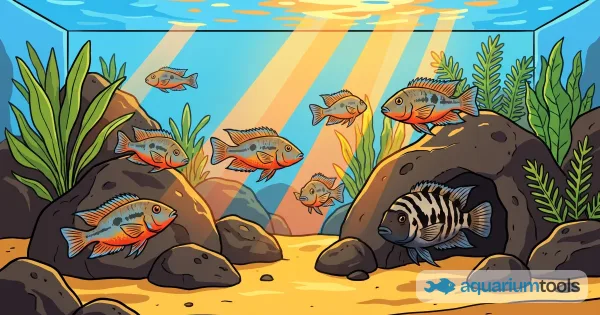
Central American Biotope: Rocks, Sand and Charismatic Cichlids
A practical guide to setting up a biotope aquarium from Mexico and Central America: water parameters, hardscape, iconic species and temperament management.
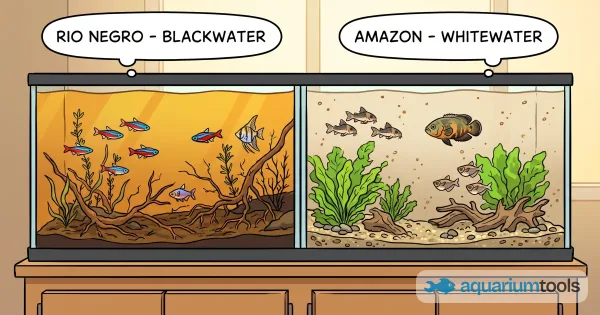
Amazonian whitewater biotope: an ecosystem different from the Rio Negro
Discover the Amazonian whitewater biotope: Andean origins, water chemistry, aquarium setup and typical fauna, compared with the famous blackwaters of the Rio Negro.
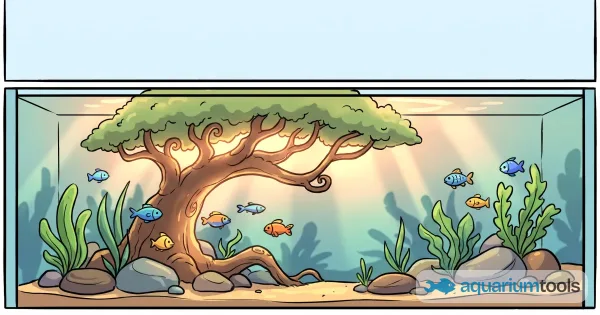
Filipe Oliveira: Portuguese aquascaping on the world stage
A portrait of Filipe Oliveira, the Portuguese aquascaper known as FAAO, between natural layouts, submerged trees and a leading role in the international community.
All material on this site is protected by copyright. Partial or total copying and republishing without authorization is not allowed.
Comments
Join the conversation
Create a free account to leave a comment. It only takes a minute and you'll come right back here.
No comments yet. Be the first to share your experience.