How aquarium volume is calculated
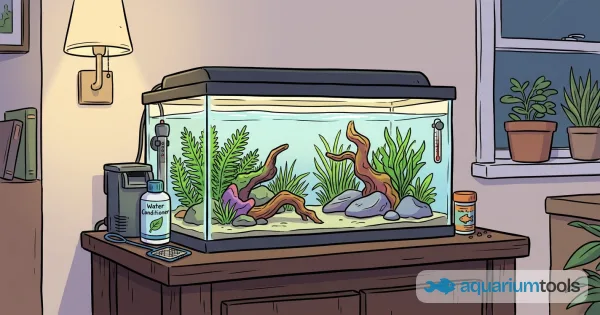
Aquarium volume is just length × width × height. The trick is that aquarists almost always quote a tank by its gross volume – the headline number on the box – when what actually matters for stocking, dosing, and water changes is the net volume: gross minus everything that isn't water.
Substrate displaces real water – a 5 cm sand bed in a 60 × 30 cm tank steals 9 litres. Rocks and wood take more. Equipment (heater, internal filter, CO₂ diffuser) eats a litre or two. Real-world net volume usually runs 80–90% of the headline figure.
Glass thickness - a sensible rule
Hydrostatic pressure rises with depth, not surface area. The classic rule of thumb is height in cm ÷ 18 rounded up, with a safety factor of about 3.8. A 36 cm tall tank wants 4 mm glass; a 60 cm tall tank wants 6 mm. Tempered (toughened) glass is stiffer, but if it ever fails, it fails catastrophically – annealed is the safer choice for home aquariums.