Jeff Senske and Aquarium Design Group: Aquascaping on a Professional Scale
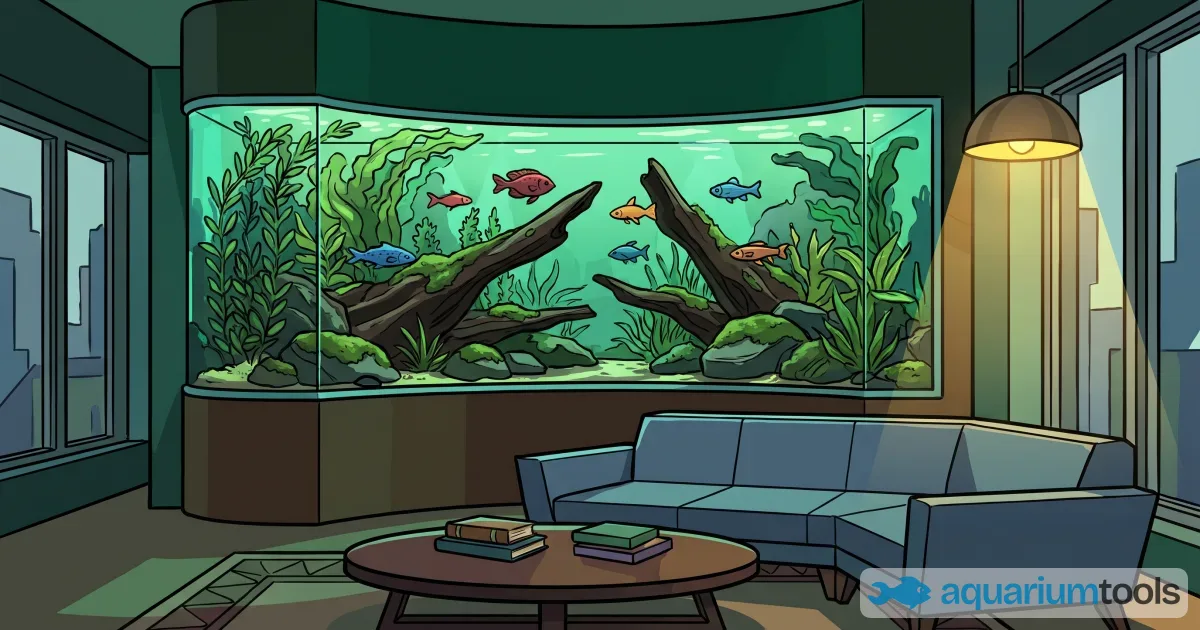
When the aquarium becomes architecture
In the world of contemporary fishkeeping, few names evoke the idea of an aquarium as a living work of art as strongly as that of Jeff Senske and his studio, the Aquarium Design Group (ADG), based in Houston, Texas. Together with his brother Mike Senske, Jeff has helped redefine the way the planted aquarium is conceived, designed and integrated into private homes, offices and commercial spaces.
ADG's mission can be summed up in a precise ambition: to elevate aquascaping from the realm of the domestic hobby to that of a genuine design discipline, able to engage in dialogue with architecture and interior design. In this vision, the aquarium is not a mere decorative accessory, but an aquatic landscape conceived as a structural and narrative element of a space.
The studio's history and vision
Aquarium Design Group was born from the meeting of a passion for nature and a culture of design. Active in the field for decades, the Senske brothers' studio has progressively specialised in creating bespoke aquatic installations, shifting its focus from classic standardised tanks toward custom projects conceived case by case.
ADG's design philosophy is rooted in the principle that every aquarium should arise from the context in which it will live. It is not about placing a tank in a room, but about composing an ecosystem that is coherent with the light, the volumes and the architectural language of the host environment. This approach has led the studio to work on increasingly larger formats, from large planted aquariums to paludariums, all the way to complex aquatic landscapes that integrate emersed and submersed sections.
The move from the traditional tank to the large-scale installation required a parallel growth in expertise: managing weight and structural loads, plumbing, filtration, lighting and scheduled maintenance all become an integral part of the project from the earliest stages, exactly as would happen with an interior design project.
Compositional style and technical approach
Jeff Senske's style is recognisable for its pursuit of balance between naturalness and compositional rigour. ADG has historically been tied to the Nature Aquarium philosophy made famous by the Japanese master Takashi Amano and the company Aqua Design Amano (ADA): the idea of recreating in a tank a fragment of nature arranged according to precise aesthetic principles, from the placement of rocks and wood to the selection of plants.
In large-format projects, however, these principles have to contend with additional demands. The management of volumes becomes crucial: an aquascape that works in a small tank must be completely rethought as depth and length increase, to prevent the composition from appearing empty or disproportionate. Hence the attention to perspective, to vanishing lines and to the skilful use of hardscape (wood and rocks) as the skeleton of the landscape.
Another distinctive element is the integration of technology. In a professional installation, filters, CO₂ systems, pumps, heating and lighting must deliver high performance while remaining as invisible as possible, so as not to interfere with the aesthetic reading of the whole. The ability to conceal the equipment without compromising its efficiency is one of the skills that distinguish a carefully crafted project from a simple setup.
Finally, the selection of plants and animals is calibrated not only for visual impact but also for long-term sustainability. Choosing plants suited to the lighting and the anticipated maintenance, and fish populations consistent with the volume and the desired aesthetic, means designing an ecosystem meant to last, rather than an ephemeral stage set.
A catalyst for aquascaping in the United States
The contribution of Jeff Senske and ADG goes beyond any single project. The studio played an important role in spreading the culture of natural aquascaping in the US market, at a time when this aesthetic sensibility was still little known outside Japan and certain European circles.
Through online outreach, the sharing of their own projects and their participation in community life, ADG helped shape a new generation of enthusiasts. Their work demonstrated in concrete terms how an aquarium can be designed with the same care devoted to a garden or an interior space, helping to bring fishkeeping closer to the world of biophilic design, the design movement that values the presence of living natural elements in living and working spaces.
This outreach has had a tangible cultural effect: it has raised the public's expectations of what an aquarium can be and has encouraged many enthusiasts to consider composition, balance and care for nature as an integral part of the experience, rather than secondary details.
A legacy that unites nature and design
The experience of Jeff Senske and Aquarium Design Group shows that professional aquascaping has a value that goes beyond the beauty of any single aquarium. Bringing a fragment of aquatic nature inside a building means improving the perceived quality of a space, creating a focal point capable of engaging those who observe it and introducing a living element that changes and grows over time.
In an age when architecture increasingly seeks contact with nature, ADG's work offers a concrete model of integration between technique, biology and aesthetics. Jeff Senske's most enduring legacy, beyond the individual projects, is perhaps precisely this: having helped establish aquascaping as a creative discipline in its own right, able to engage as an equal with contemporary design and architecture.
Sources
- Official website of Aquarium Design Group - adgaquascaping.com
- Aquarium Design Group's blog and project portfolio
- Educational materials from Aqua Design Amano (ADA) on Takashi Amano's Nature Aquarium philosophy
- Interviews and profiles published in magazines and sector portals dedicated to aquascaping and planted aquariums
Keep reading
Central American Biotope: Rocks, Sand and Charismatic Cichlids
A practical guide to setting up a biotope aquarium from Mexico and Central America: water parameters, hardscape, iconic species and temperament management.
Aquarium Water Test: Strips or Liquid Reagent? Guide and Key Values
A complete guide to aquarium water tests: the 6 key values, the comparison between strips and liquid reagents, and the best kits for every budget.
Light in the freshwater aquarium: a guide to the perfect photoperiod
How light works in the aquarium, what Kelvin, colour rendering and intensity mean, and how to set a balanced photoperiod for healthy plants and fewer algae.
All material on this site is protected by copyright. Partial or total copying and republishing without authorization is not allowed.
Comments
Join the conversation
Create a free account to leave a comment. It only takes a minute and you'll come right back here.
No comments yet. Be the first to share your experience.