Conductivity Meter (EC and TDS Meter): What It Is, How It Works and Which to Choose
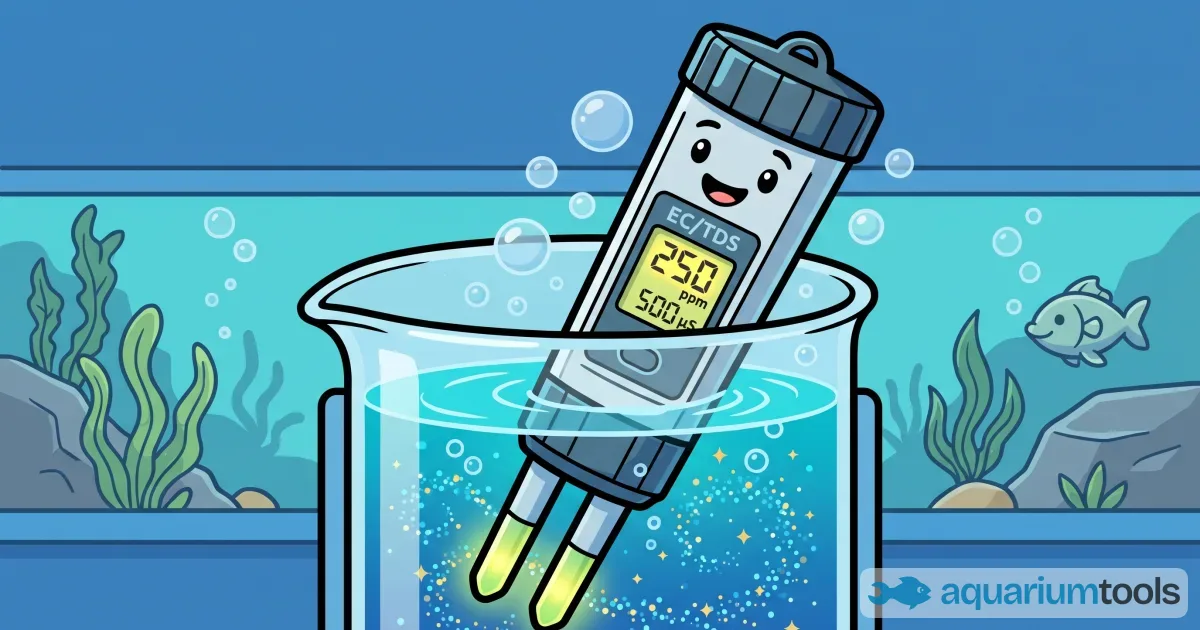
Introduction: what is the electrical conductivity of water and why measure it
Pure water, from a chemical standpoint, conducts electricity very poorly. It is the dissolved mineral salts (calcium, magnesium, sodium, nitrates, phosphates and other ions) that allow current to pass. The more salts present, the more conductive the water becomes. Measuring this property gives you an immediate and reliable idea of the total amount of dissolved substances, without having to resort to laboratory analysis.
The instrument that performs this measurement is called a conductivity meter, or EC meter (from the English Electrical Conductivity). It is an inexpensive, fast and surprisingly useful device in many areas: from hydroponics to aquarium keeping, from reverse osmosis systems all the way to simply checking your household water.
How a conductivity meter works: the fundamental difference between EC and TDS (ppm)
The operation is simple: two electrodes immersed in the water apply a small voltage and the instrument measures how much current manages to pass through. The result is the electrical conductivity, expressed in microSiemens per centimetre (µS/cm) or in milliSiemens per centimetre (mS/cm).
Many devices are sold as TDS meters (total dissolved solids meters) and display a value in ppm (parts per million) or in mg/l. Here comes the most important and often misunderstood point:
The TDS value is not a direct and independent measurement: it is simply a mathematical conversion of the EC.
The instrument always and only measures conductivity, then multiplies it by a conversion factor to estimate ppm. The most common factors are:
- Factor 0.5 (NaCl): very common, American standard.
- Factor 0.64 (441): used in certain fields.
- Factor 0.7 (KCl/442): typical European and hydroponic factor.
This means that the same water can show different ppm values on different instruments, simply because they use a different factor. For this reason, more experienced users prefer to work directly in EC (µS/cm or mS/cm), which is an objective figure that cannot be interpreted differently.
Precisely to handle these conversions correctly, our "calc_fertilizer" calculator helps you go from EC to ppm (and vice versa) and set fertiliser doses based on the target value you want to reach, avoiding overdosing errors.
Main areas of application
Hydroponics and gardening
In soilless cultivation, EC is a crucial parameter: it indicates the concentration of nutrients in the solution. A value that is too low means starving plants, one that is too high can cause osmotic stress and "burns" to the roots. Every species and every growth stage has its own optimal EC range.
Aquarium keeping (freshwater and marine)
In the freshwater aquarium, EC helps to monitor the hardness and mineralisation of the water, essential for demanding fish and plants (such as Caridina or certain Cichlids). In the marine aquarium, conductivity is correlated to salinity, although in this field refractometers or calibrated hydrometers are more often used.
Reverse osmosis systems
A conductivity meter is the ideal tool to check the efficiency of the osmotic membrane. By comparing the EC of the incoming water with that of the outgoing water, you calculate the rejection percentage: if the outgoing value rises too much, it is a sign that the membrane is exhausted and needs to be replaced.
Drinking water and domestic use
For tap or bottled water, EC (or ppm) gives a general indication of the fixed residue and mineral content. Be careful: a high value does not mean "bad" water and a low one does not guarantee absolute purity, because the instrument does not distinguish the types of salts nor does it detect bacteria or organic contaminants.
Key features to look for: ATC and periodic calibration
The conductivity of a solution varies with temperature: the warmer the water, the greater the mobility of the ions and therefore the reading. This is why the most important function is ATC (Automatic Temperature Compensation), that is, the automatic compensation of temperature.
- An instrument with ATC automatically brings the measurement back to a reference temperature (usually 25 °C), ensuring comparable readings in any condition.
- Without ATC, the same water measured in summer and in winter would give different values, making the data unreliable.
The second fundamental function is calibration. Over time the electrodes get dirty and lose precision, so they must be periodically recalibrated using calibration solutions of known value (for example 1413 µS/cm or 12.88 mS/cm).
- Calibrate regularly, especially before important measurements.
- Keep the probe clean and, when required, moist.
- Always use fresh, unexpired solutions.
Buying guide: the best conductivity meters for every budget
We have selected three instruments across three price ranges, so as to cover every need, from beginner to professional.
Low range - Entry level (~10-15 €)
Ideal use: beginners, quick checks of household water and verification of domestic osmosis filters.
Pros:
- Very inexpensive and accessible to everyone.
- Easy to use, ideal for those starting out.
- Compact and pocket-sized.
- Includes temperature measurement.
Cons:
- Limited precision compared to higher models.
- Non-replaceable probe and less reliable calibration over time.
Mid range - Prosumer, hydroponics and aquariums (~40-60 €)
Ideal use: hydroponic cultivation, keen aquarists and small laboratories.
Pros:
- High measurement precision.
- Accurate manual or digital calibration.
- Replaceable probe in the waterproof models.
- Professional-level brand.
Cons:
- A more demanding price for only occasional use.
- Requires proper management of calibration and maintenance to reach its full potential.
High range - Professional, intensive use (~100-150 €+)
Ideal use: professional hydroponic growers, greenhouses and commercial facilities.
Pros:
- Ultra-rugged construction and 100% waterproof.
- Great stability: minimal need for continuous calibration.
- Industrial-grade warranty and reliability.
- Immediate and clearly visible reading on the LED display.
Cons:
- A significant investment, hardly justified for hobby use.
- Advanced functions often excessive for the beginner.
Conclusion
The conductivity meter is a simple but extremely valuable tool: it allows you to keep the mineralisation of the water under control quickly and cheaply. Remember the two key concepts: TDS is only a conversion of EC, so work in µS/cm or mS/cm whenever possible; and always look for a model with ATC, keeping it calibrated over time. Choose the range suited to your real use, and rely on our calculator to turn the measured values into correct dosages.
Quick FAQ
Are EC and TDS the same thing?
No. The instrument always measures EC (conductivity); TDS in ppm is an estimate obtained by multiplying the EC by a conversion factor, which can vary from model to model.
How often should the conductivity meter be calibrated?
It depends on use, but in general it is good practice to calibrate it with a reference solution at least once a month, or before particularly important measurements.
Is a high EC in drinking water dangerous?
Not necessarily. A high value only indicates many dissolved salts, not contamination. The instrument does not detect bacteria, specific metals or organic pollutants.
Do I need ATC?
Yes, it is almost indispensable: without temperature compensation the readings change as the water's heat varies and become difficult to compare.
Keep reading
Light in the freshwater aquarium: a guide to the perfect photoperiod
How light works in the aquarium, what Kelvin, colour rendering and intensity mean, and how to set a balanced photoperiod for healthy plants and fewer algae.

Keeping Caridina and Neocaridina Shrimp: A Complete Beginner's Guide
A practical guide to keeping freshwater shrimp: the differences between Neocaridina and Caridina, water parameters, setup, feeding and breeding.
All material on this site is protected by copyright. Partial or total copying and republishing without authorization is not allowed.
Comments
Join the conversation
Create a free account to leave a comment. It only takes a minute and you'll come right back here.
No comments yet. Be the first to share your experience.