Aquarium Water Test: Strips or Liquid Reagent? Guide and Key Values
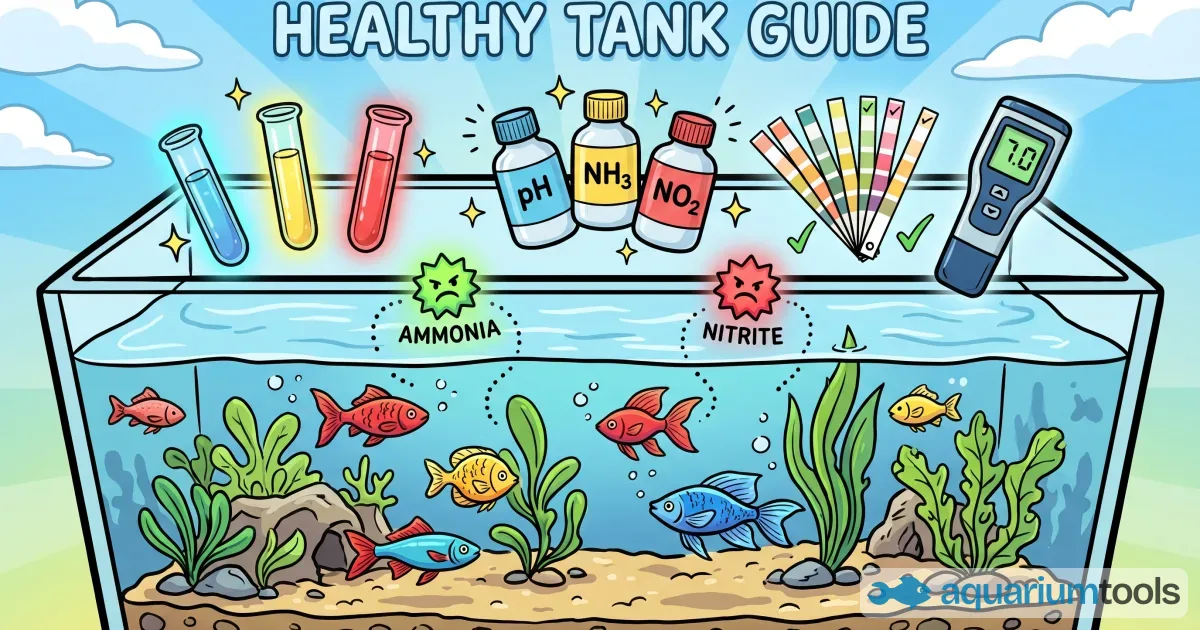
A healthy aquarium cannot be judged by eye. Behind seemingly perfect water, invisible toxic substances can lurk, capable of stressing or killing fish within a few hours. Learning to perform the aquarium water test regularly is the difference between a tank that thrives and one that collapses.
In this guide we look at which freshwater aquarium water values to monitor, the differences between aquarium test strips and liquid reagent tests, and how to choose the right kit for your needs and your budget.
Why is measuring aquarium water essential?
There is a paradox that fools almost every beginner: crystal-clear water. A clear tank looks clean, but clarity only concerns suspended particles. Ammonia, nitrites and nitrates, on the other hand, are completely transparent and odourless.
In other words, the water that looks the most beautiful may be chemically lethal. Only a test makes visible what your eyes cannot perceive.
The main reason we monitor these values is the nitrogen cycle. Fish waste and food residues produce ammonia, which the beneficial bacteria in the filter first transform into nitrites (toxic) and then into nitrates (less dangerous, but to be kept low).
If this cycle is not yet mature, or if something disrupts it, the values spike and the fauna pays the consequences. Monitoring the water allows you to intervene before it is too late, avoiding both the loss of fish and annoying algae blooms.
The 6 key values to keep under control
Here are the parameters that every aquarist should know, with the indicative ranges for a freshwater community aquarium.
pH (Hydrogen Potential)
It indicates how acidic or basic the water is, on a scale from 0 to 14. Most tropical community fish thrive with an indicative ideal range between 6.5 and 7.5, but this varies greatly depending on the species kept.
GH (Total Hardness)
It measures the total concentration of dissolved calcium and magnesium salts. It determines whether the water is soft or hard and profoundly influences the well-being of fish and plants.
KH (Carbonate Hardness)
It is the buffering effect of the water: it prevents sudden drops in pH. A KH that is too low makes the pH unstable and dangerous; an adequate KH keeps the aquarium in balance.
NO2 (Nitrites)
Extremely toxic compounds that result from the transformation of ammonia. The value must ALWAYS be equal to 0 mg/l. Knowing how to measure nitrites in the aquarium is crucial especially in the first weeks of the tank's life.
NO3 (Nitrates)
The final product of the nitrogen cycle. They are less dangerous, but should be kept indicatively below 25-50 mg/l through regular water changes and live plants.
NH3/NH4+ (Ammonia / Ammonium)
The primary toxins of the system. They are particularly critical in the first month of start-up, when the filter bacteria have not yet stabilised. Ammonia (NH3) becomes more toxic the higher the pH rises.
Warning: in the first month of the tank's start-up (the so-called filter break-in) check ammonia and nitrites every 2-3 days. Adding fish when these values are not at zero is the most common cause of die-offs in new aquariums.
Liquid reagent tests vs multi-test strips: pros and cons
There are two major families of tests. Aquarium test strips are tabs with reactive squares that change colour on contact with water: you dip them in, wait a few seconds and compare the colours with a reference scale.
The liquid reagent tests work by adding drops of reagent to a water sample in a test tube: accuracy is markedly higher because it is based on controlled chemical reactions and on a finer colour comparison.
| Feature | Strip Tests (6in1) | Liquid Reagent Test |
|---|---|---|
| Precision / Accuracy | Medium - Low (subject to degradation from humidity) | High / Professional |
| Speed of execution | Immediate (30-60 seconds) | Takes 5-10 minutes |
| Ease of use | Very simple (a single dip) | Requires counting drops and test tubes |
| Cost per single test | Very low | Medium-low (many tests per bottle) |
| Ideal use | Weekly routine and quick checks | Tank start-up, emergencies and complex problems |
Warning: never touch the reactive squares of the strips with wet fingers and close the packaging immediately after use. Humidity degrades the reagents and completely distorts the measurements.
Which kit should you choose? The best tests for every budget
We have selected three solutions in order of increasing budget, from the most economical to the most complete.
1. Economy budget: Tetra Test 7 in 1 (strips)
Traditional multi-test strips that in about 60 seconds measure pH, KH, GH, NO2, NO3 and chlorine. They are the ideal solution for those taking their first steps who want simple and immediate routine monitoring.
Perfect for those who have little time and want a quick overview of the freshwater aquarium water values without complications.
Buying tip: the Tetra Test 7 in 1 strips are the most economical way to start monitoring your tank. Check the price and availability here:
2. Medium / smart budget: JBL ProScan (strips with smartphone reading)
JBL ProScan combines the speed of strips with the precision of digital. It uses a colour calibration card and the smartphone camera to eliminate human error in interpreting the shades.
The app saves the history of the values, allowing you to follow the aquarium's trend over time. Ideal for those who want speed and data tracking without switching to test tubes.
Buying tip: with JBL ProScan you say goodbye to doubts when reading the colours. Discover the offer here:
3. High / professional budget: JBL Proaquatest Combi Set plus NH4 (reagent case)
The definitive solution: a professional liquid reagent case that includes all the critical parameters for freshwater (pH, KH, NO2, NO3, NH4/NH3 and Fe - iron). The laboratory comparison system compensates for the water's own colouring, guaranteeing maximum precision.
Included you will find dosing syringes and waterproof glass test tubes. The JBL Proaquatest range is designed for demanding aquarists, for those setting up a new tank or who need to diagnose complex problems of plant health and growth.
Buying tip: if you want reliable results like in a laboratory, the JBL Proaquatest Combi Set plus NH4 is the right investment. Check the price here:
Practical tip: the combined usage strategy
The most experienced aquarists do not choose between strips and reagents: they use both. Here is the golden rule.
- Use the strips for a quick check 1-2 times a week during normal aquarium management.
- Keep the liquid reagent case within reach for the start-up phase (the first month of the filter) or when the strips signal an abnormal value that requires immediate confirmation.
This way you spend little on the routine and maintain maximum precision when it really counts.
From values to water changes: how to intervene
Measuring is the first step; the second is taking action. When nitrates rise above the recommended threshold, the simplest solution is a partial water change. But how much water should you replace to bring the value back to safe levels?
This is where our water change calculator comes into play: by entering the tank volume and the measured value, it helps you estimate the percentage of water to change to bring the parameters back within the ideal limits, without stressing the fish with overly drastic interventions.
The virtuous flow is always the same: measure, interpret, intervene, re-check. With the right tests and a bit of consistency, keeping the aquarium healthy becomes a simple and rewarding routine.
Keep reading
Light in the freshwater aquarium: a guide to the perfect photoperiod
How light works in the aquarium, what Kelvin, colour rendering and intensity mean, and how to set a balanced photoperiod for healthy plants and fewer algae.
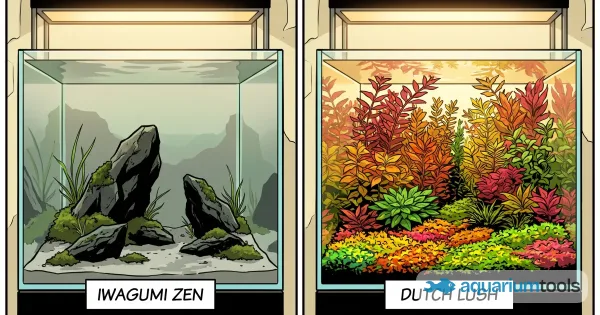
Iwagumi vs Dutch: Two Aquascaping Philosophies Compared
Discover the differences between the Iwagumi style and the Dutch style: history, compositional rules, plants, fish and a practical comparison to choose your ideal aquarium.
All material on this site is protected by copyright. Partial or total copying and republishing without authorization is not allowed.
Comments
Join the conversation
Create a free account to leave a comment. It only takes a minute and you'll come right back here.
No comments yet. Be the first to share your experience.