The benefits of an aquarium for children: why it's good for their growth
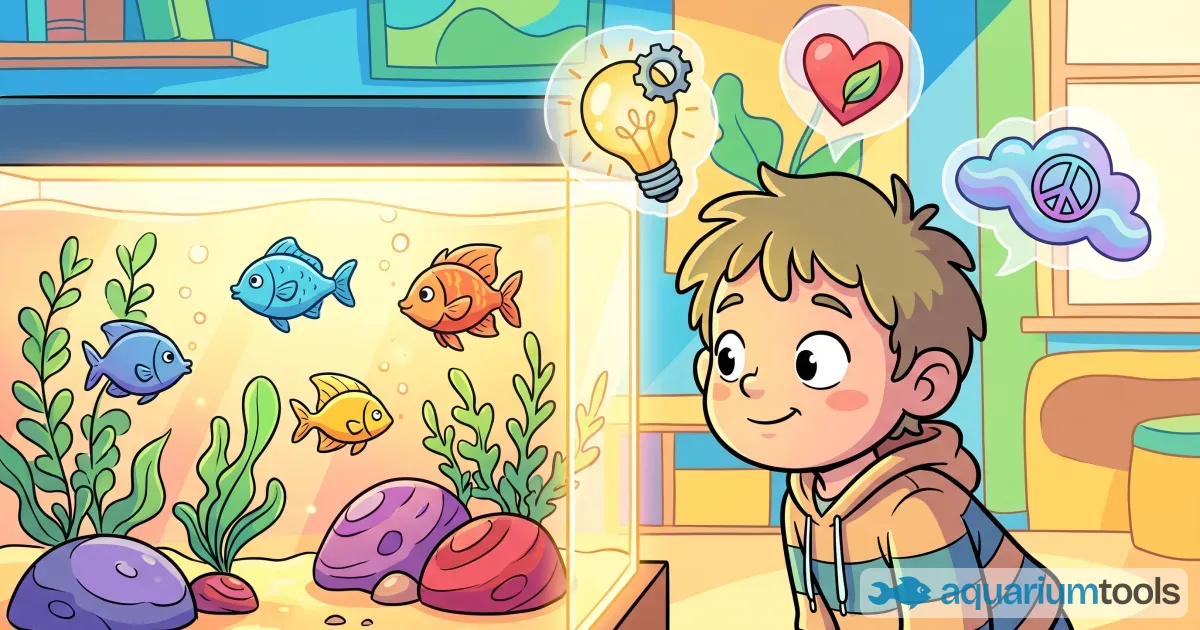
When thinking about a pet for your children, the mind runs straight to a dog or a cat. Yet an aquarium, often underestimated, offers children something different and precious: a small ecosystem to observe every day, requiring limited physical effort but with enormous educational value. It doesn't need walks or the handling of an animal that jumps and bites, but it teaches children to look carefully, to be patient and to care for living beings.
In this article we talk about the concrete benefits of an aquarium for children (cognitive, emotional and educational) and how to set up a first aquarium for children without mistakes. The tone is aimed at you parents, not the little ones: the idea is to help you evaluate this activity for what it is, namely an excellent tool for growth.
Why an aquarium is different from other pets
The main feature of an aquarium is the balance between low physical effort and high observational value. A fish doesn't need to be taken outside, doesn't make a mess in the house and doesn't disturb the neighbours. In return it offers a continuous window onto a living world: the growth of the plants, the behaviour of the fish, the small changes in the water.
For a child this translates into a form of learning that is natural and repeated over time. It's not a toy that wears out in a few days: it's a system that changes slowly and rewards those who observe it consistently.
Educational benefits: science in miniature
An aquarium is probably the first science laboratory a child can have in their room. Through it, concepts that at school only come from books can be experienced first-hand.
- Biology and ecosystems: fish, plants, bacteria and invertebrates live together and depend on one another. The child understands that nothing lives in isolation.
- The nitrogen cycle, explained simply: fish produce waste substances (ammonia), which certain bacteria transform first into nitrites and then into nitrates, which are less harmful. It's an excellent way to introduce the idea that in nature the "waste" of one organism becomes a resource for another.
- The scientific method: observing, taking notes, forming hypotheses. Keeping a small aquarium diary when the fish are fed, when the water is changed, what behaviours are noticed, gets children used to gathering data and reasoning about cause and effect.
There's no need to turn everything into a lesson: it's enough to answer the children's questions as they arise. Curiosity will do the rest.
Benefits for responsibility
Caring for living beings that depend on you is a real responsibility, but a manageable one. An aquarium imposes small daily and weekly routines: feeding the right amount, checking that everything is working, taking part in water changes.
The most important lesson a child learns is respecting timing and quantities. Overfeeding, for example, is not an act of love but a mistake that pollutes the water. It's a concrete way to understand that "doing more" is not always better and that commitments made must be kept even when you don't feel like it.
Emotional and psychological benefits
Watching fish swim has a relaxing effect that is also recognised by research. A study conducted by the University of Plymouth together with the National Marine Aquarium found that watching populated aquariums was associated with a reduction in heart rate and blood pressure in participants, as well as an improvement in mood. It's one of the reasons aquariums are often found in waiting rooms and medical offices.
For children this can translate into some concrete benefits:
- A corner of calm: a quiet moment of observation, useful as a break from screens and constant stimulation.
- Managing waiting and frustration: in an aquarium results are not immediate, and this helps develop patience.
- Empathy: caring for a living being, however small, trains the ability to think about the needs of another.
It's right to remain cautious: an aquarium is not a therapy and does not replace any professional support. But as a calm and engaging daily activity it has real value.
Practical tips for starting with children
There is only one golden rule: the "heavy" maintenance remains a task for adults. Major water changes, the use of conditioning products and the handling of electrical equipment are the parent's responsibility. The child is entrusted with tasks proportionate to their age.
Involvement by age group
- 5-7 years: guided observation, helping to feed under supervision, drawing the fish, keeping an illustrated diary.
- 8-10 years: independent management of feeding in the correct amounts, visual checking of temperature and behaviour, more structured note-taking.
- 11-12 years: participation in water changes, use of water tests with supervision, researching information about the species.
What kind of aquarium and which fish
It's better to start with an aquarium of reasonable size (very small tanks are actually harder to keep stable) and with robust, calm species. Before choosing fish for children it's essential to learn about the real needs of each species: temperature, space, compatibility and feeding. A guiding principle is to dedicate the first weeks to starting up the aquarium, before introducing the animals, to let the ecosystem stabilise.
Mistakes to avoid
- Unrealistic expectations: an aquarium isn't set up and populated on the same day. The initial wait is part of the game and should be explained.
- Treating it like a toy: tapping on the glass, dipping hands in for no reason or constantly changing the fish are behaviours to be calmly discouraged, explaining why.
- Overfeeding: the most common mistake. Better too little food than too much.
- Safety: watch out for heavy glass and lids, for plugs and electrical cables (use switches and arrange the cables safely) and for chemicals and conditioners, which must be kept out of reach of the little ones.
In conclusion
A well-managed aquarium is much more than a piece of decor: for a child it can be their first encounter with science, with responsibility and with the wonder of caring for life. The secret is to start calmly, divide the tasks well between grown-ups and children and experience it together.
If this idea has convinced you, the next step is to choose the right species to start with: take a look at our guides on the fish most suitable for beginners and on how to correctly set up your first tank, so you can get off on the right foot.
All material on this site is protected by copyright. Partial or total copying and republishing without authorization is not allowed.
Comments
Join the conversation
Create a free account to leave a comment. It only takes a minute and you'll come right back here.
No comments yet. Be the first to share your experience.