Impossible Cohabitations: Which Fish You Should Never Pair
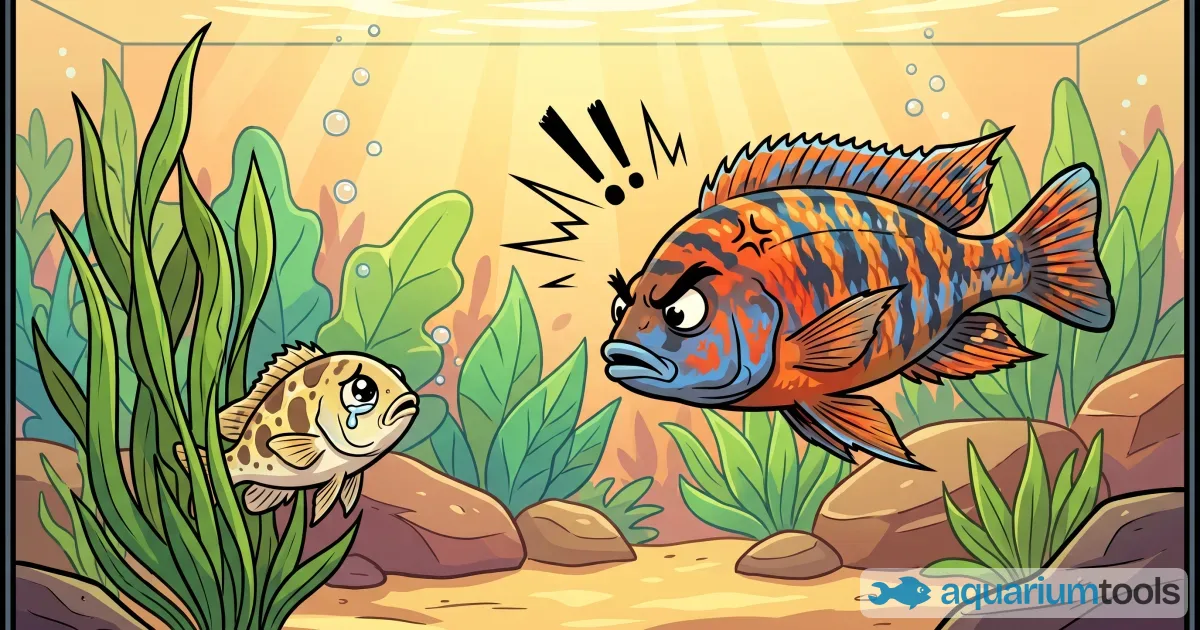
Many aquarium problems don't stem from disease or poor maintenance, but from wrong choices made at the time of purchase. Putting incompatible species together generates chronic stress, injuries, disease and mortality that the aquarist often can't explain. In this guide we look at the most problematic combinations, what actually happens in the tank, and how to assess compatibility before bringing home a new fish.
Why compatibility matters more than you think
A stressed fish eats less, has a weakened immune system and becomes a target for infections. In a poorly assorted aquarium, stress isn't an isolated episode but a permanent condition. Assessing temperament, size, water requirements and use of space is therefore an integral part of designing a healthy tank.
Combinations to avoid
1. Territorial fish with shy species
Many cichlids (for example dwarf cichlids like Pelvicachromis or some more aggressive American species) actively defend their own territory, especially during the breeding phase. If they live alongside timid and slow species, such as certain shy characins or small bottom-dwelling fish, the submissive specimens get relegated to the corners, stop feeding and waste away. The typical result is a fish that "disappears" into the vegetation and dies from stress and malnutrition with no obvious signs of aggression.
2. Long-finned fish with fin-nipping fish
This is one of the most classic mistakes. Species with wide, flowing fins, such as the male betta (Betta splendens) or veil-tailed guppies, are irresistibly attractive to nippers. Serpae tetras, some barbs (like the tiger barb) and the teeth of certain cichlids nip at the fins, which gradually become frayed. The open wounds then become entry points for bacterial and fungal infections. Even without genuine aggression, the fish lives in constant flight.
3. Species with opposite water parameters
Not all incompatibilities are behavioural. Putting together fish that require soft, acidic water (many Amazonian characins or some blackwater species) with species that thrive only in hard, alkaline water (like the African Rift Lake cichlids of Malawi and Tanganyika) is a losing compromise. Whatever value you choose, one of the two populations will live in suboptimal conditions, with osmoregulation problems, dull colouration and impossible breeding. The rule is simple: you choose fish based on the water you can maintain stably, not the other way around.
4. Fish of very different sizes
In nature an elementary law applies: if something fits in the mouth, sooner or later it will be eaten. A predatory fish, or even just a large cichlid, will regard small characins or neons as food, not as companions. A frequent mistake is buying juvenile specimens of species that reach very different sizes as adults: they look compatible in the shop, but within a few months the size gap turns cohabitation into predation.
5. Territorial males of the same species
Two male bettas in the same tank almost always end up fighting until one is seriously injured. The same goes for many male cichlids that tolerate no rivals in their own space. In these species the solution is never to "keep two" but just one, or structured groups with several females and ample space with hiding places that break up sight lines.
6. Schooling fish kept in insufficient numbers
Many gregarious fish, such as neons, cardinals, rasboras and various characins, need to be in large groups (ideally six to eight specimens or more). Kept in twos or threes, they become nervous, stressed and sometimes aggressive towards each other or towards other species. This isn't a problem of different species, but of management: buying "a couple" of schooling fish is effectively a bad cohabitation with themselves.
7. Occupants of the same swimming zone and the same space
Even theoretically peaceful fish come into conflict if they compete for the same area. Two territorial bottom-dwelling species, or several males claiming the same cave, will contest hiding spots and food. The warning sign is the appearance of "forbidden" zones in the tank where some specimens don't dare venture.
8. Fast, voracious fish with slow-feeding specimens
A school of lively barbs or danios can clear the surface before slow fish, such as some bottom-dwelling corydoras or shy specimens, manage to approach. The conflict here isn't made of bites but of hunger: the slower fish lose weight gradually. It's an especially insidious problem because it goes unnoticed until it's advanced.
How to assess compatibility before buying
Before adding a new species, stop and check these points. A mental checklist prevents most mistakes.
- Adult size: find out about the maximum size, not the size of the specimen on sale. Compare sizes: if one mouth can hold another fish, cohabitation is at risk.
- Temperament: distinguish between peaceful, semi-aggressive and territorial. Avoid mixing opposite extremes, such as very shy species with dominant ones.
- Water parameters: compare the required ranges of temperature, pH and hardness. They must overlap widely, not just brush at the edges.
- Zone of the tank: check whether the fish occupies the surface, the central column or the bottom. Distributing species across different zones reduces competition.
- Social structure: determine whether the species should be kept alone, in a pair or in a large group, and plan for the correct numbers from the start.
- Volume and setup: a larger aquarium, well planted and with hiding places, breaks up sight lines and eases many conflicts. Space doesn't resolve deep incompatibilities, but it dampens minor tensions.
A summary table helps to pin down the critical combinations.
| Risky combination | What happens |
|---|---|
| Territorial + shy | The submissive ones don't eat and waste away |
| Long-finned + fin-nipping | Frayed fins, infections, stress |
| Opposite water parameters | One population always lives in wrong conditions |
| Very different sizes | Predation of the smaller ones |
| Territorial males together | Fights and serious injuries |
| Schooling fish in small numbers | Nervousness and aggression |
In summary
Cohabitation in the aquarium works when the species share the same water requirements, have compatible temperaments, don't prey on each other due to size differences, and occupy different spaces without contesting the same resources. Before every purchase, spend a few minutes checking: it's the cheapest and most effective way to avoid stress, disease and losses. A well-assorted aquarium requires more planning up front, but it pays off with healthy, colourful and active animals for years.
All material on this site is protected by copyright. Partial or total copying and republishing without authorization is not allowed.
Comments
Join the conversation
Create a free account to leave a comment. It only takes a minute and you'll come right back here.
No comments yet. Be the first to share your experience.