First Breeding in the Aquarium: A Practical Guide for Beginners
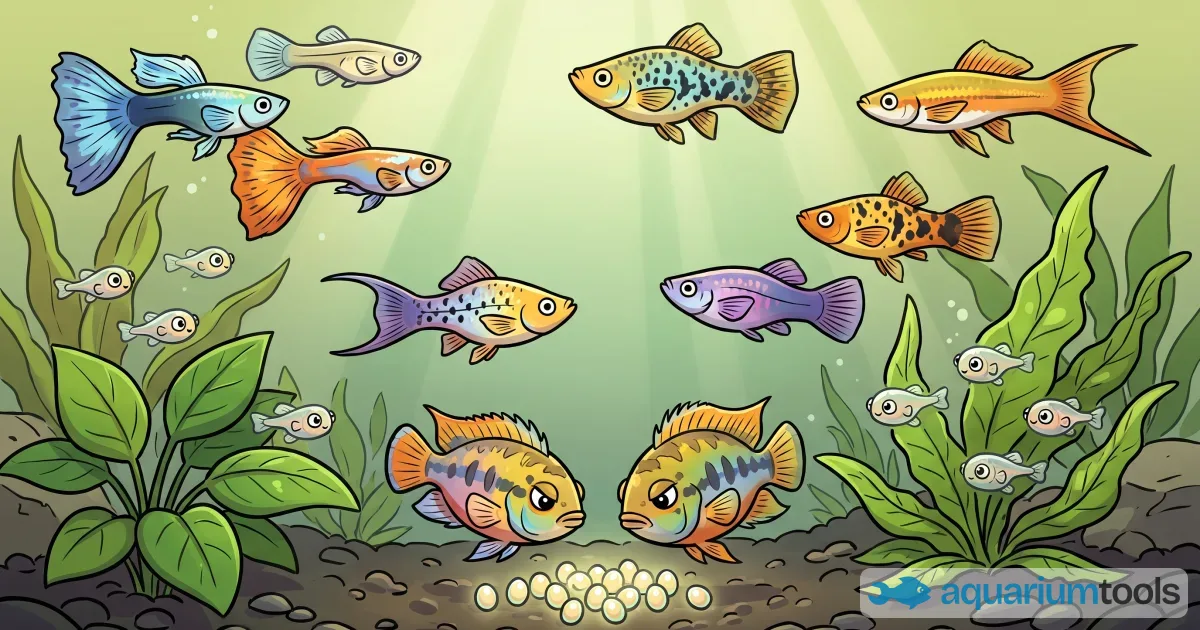
Seeing a tiny fry swim among the plants of your own tank for the first time is one of the most intense emotions for anyone who loves the aquarium hobby. It is not just about joy: spontaneous breeding is one of the most telling signs of the well-being of your ecosystem. When fish reproduce, it means the water parameters are stable, the feeding is adequate and stress is kept to a minimum. In this guide I will accompany you step by step, from choosing the species to weaning the little ones, always keeping a close eye on their well-being.
Livebearers and egg layers: two different worlds
The first major distinction to understand concerns the way species bring their offspring into the world. Much of the management depends on this difference.
Livebearers: the ideal choice to start
Poeciliids such as Guppies, Platies, Mollies and Swordtails are considered the perfect gateway to breeding. The females hold the eggs inside their bodies and give birth to fry that are already formed and able to swim on their own. No complex ritual is needed: in a well-managed tank with males and females, births come almost by themselves. A fertilized female Guppy can also produce several consecutive broods, storing sperm for weeks.
Egg layers: more effort, great satisfaction
Egg layers require more attention. Species such as Danios scatter eggs on the bottom, while dwarf Cichlids (for example Apistogramma or Ramirezi) form stable pairs and often actively tend eggs and fry. In these cases you need to stimulate spawning with precise conditions and, for egg layers that do not care for their offspring, protect the eggs from predation by the parents themselves. These are more stimulating paths, suited to those who already have a bit of experience.
Preparation and stimulating breeding
Whether you keep livebearers or egg layers, preparing the breeders makes the difference between a random attempt and a repeatable success.
Water parameters
Stability is more important than perfection. Always check that ammonia and nitrites are at zero and that nitrates stay low with regular water changes. Each species has its own preferences: Guppies like neutral to slightly alkaline water of medium hardness, while many dwarf Cichlids prefer soft, slightly acidic water. A slight rise in temperature, within the limits of the species, often acts as a natural stimulus for breeding.
Feeding the breeders
Well-fed fish are fertile fish. In the weeks leading up to breeding, enrich the diet with protein-rich live or frozen foods: Artemia nauplii, daphnia, mosquito larvae and bloodworms. Alternate these foods with a good quality flake food. This rich feeding promotes the maturation of the eggs in the females and makes the males' colors more intense, encouraging courtship.
The separate breeding tank
A valuable tool, especially for livebearers, is a separate breeding tank. It can be a small dedicated aquarium or a nursery that hangs inside the main tank. The goal is twofold: to protect the newborn fry from predation, including from the mother, and to offer them a quiet environment where they can grow. For egg layers, on the other hand, spawning grids or abundant fine-leaved vegetation are used, where the eggs fall under cover.
Caring for the fry in the first days
Once the birth is over, the most delicate phase begins: growing them out. The first days of life determine the survival and vigor of the little ones.
What to feed them
The main problem is the size of the food: a fry's mouth is tiny. Here are the most suitable foods for the first weeks:
- Specific powdered foods for fry: practical, available in different grain sizes depending on the growth stage.
- Infusoria: microorganisms ideal for the smallest fry, such as those of egg layers that have just hatched, which cannot yet take in larger foods.
- Freshly hatched brine shrimp (Artemia) nauplii: the real golden food. Live, rich in proteins and fats, they stimulate the hunting instinct and promote rapid, healthy growth. All you need is a small incubator with salt water to have fresh ones every day.
Feeding frequency
Fry have a fast metabolism and a small stomach: it is better to give small, frequent meals, three to five times a day, rather than a single abundant feeding. Portions must be minimal, just enough to be consumed in a few minutes.
The classic mistakes to avoid
Many beginners run into the same obstacles. Knowing them in advance saves you frustration and, above all, saves the lives of the little ones.
Incorrect use of the breeding box
Commercial nurseries are useful, but they must be used sensibly. Putting the female into a cramped space too soon stresses her and can lead to abortions or premature births. It is better to move her only when she is clearly close to giving birth, or to let her give birth in a well-planted tank and remove the adults immediately. Also remember that small spaces require adequate water renewal: a poorly ventilated nursery quickly becomes a trap of nitrogenous waste.
Pollution from excess food
This is the most common and most lethal mistake. For fear that the little ones will go hungry, people tend to overdo it with food. But uneaten food decomposes quickly, causing ammonia and nitrites to spike in an often small volume of water. The result is toxic water precisely when the fry are most vulnerable. The solution is simple: feed little and often, remove the residues and keep up regular, gentle water changes without sucking up the little ones.
Neglecting water changes
In grow-out tanks, clean water is synonymous with growth. Frequent, moderate changes, with water at the same temperature, keep pollutants low and stimulate development. Always use a slow-flow tube or a fine-mesh stocking so you do not suck up the fry.
Conclusion
The first breeding in the aquarium is a milestone that rewards all the care dedicated to the tank. Starting with livebearers, learning to observe your fish and respecting a few fundamental rules - stable water, adequate feeding and protection of the little ones - you will turn a random event into a real skill. Every fry that grows up healthy is confirmation that you are doing an excellent job as an aquarist. Happy breeding and lots of patience: the results will come.
All material on this site is protected by copyright. Partial or total copying and republishing without authorization is not allowed.
Comments
Join the conversation
Create a free account to leave a comment. It only takes a minute and you'll come right back here.
No comments yet. Be the first to share your experience.