The Secrets of the Nano Aquarium: Aquascaping for Small Spaces
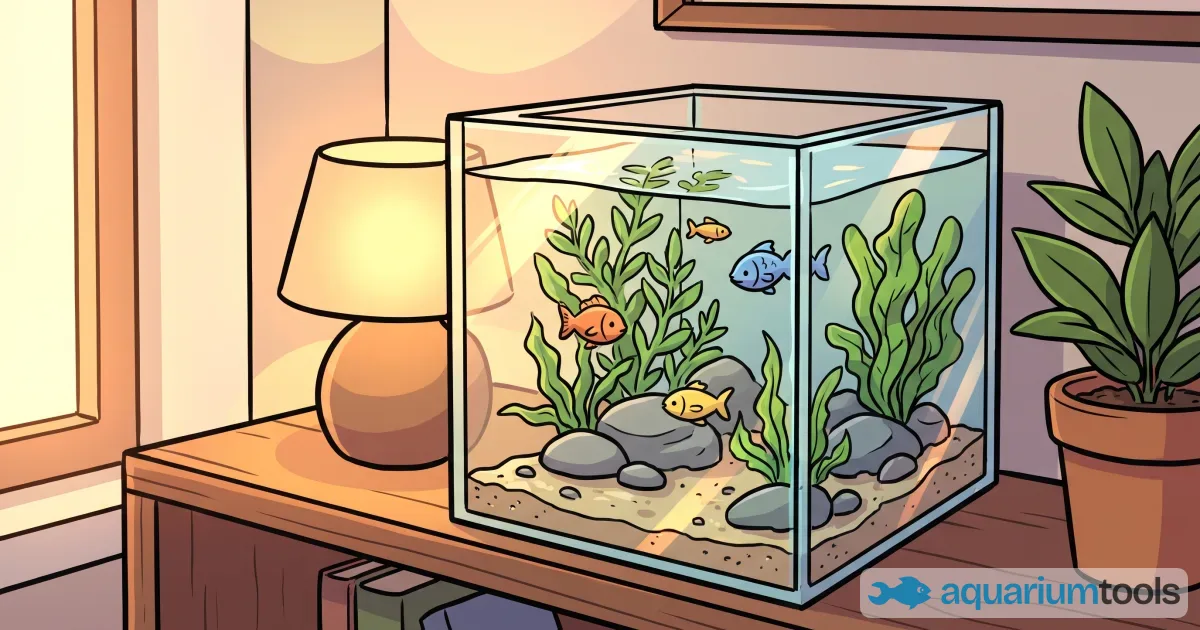
A nano aquarium is a small window onto a miniature aquatic world: elegant, discreet and capable of transforming a desk or a shelf into a living landscape. Under 30 litres the rules change slightly compared to traditional tanks, but with a few precautions it is possible to achieve surprising results. In this guide we look at how to choose the equipment, select the right inhabitants, apply the principles of aquascaping and manage the challenges typical of small volumes.
Why choose a nano aquarium
The charm of the nano aquarium lies in its ability to concentrate beauty and nature into a reduced space. It is perfect for those who have little room, for those who want a bold aesthetic impact or for those who wish to devote careful attention to a small ecosystem. However, "small" does not mean "easy": a reduced volume reacts more quickly to every variation, so it requires attention and consistency.
The right equipment for small volumes
Choosing the equipment is the first step towards success. In a nano aquarium every component must be proportionate and well calibrated.
- The tank: it is better to opt for a format with thin glass and, if possible, low iron (extra-clear), which enhances the colours. Cubes or low rectangular tanks offer good surfaces for aquascaping.
- The filter: compact external filters or small hang-on filters are ideal. It is important that the flow is adjustable and not too strong, otherwise it would stress fish and plants. Many aquascapers prefer a small external filter to keep the tank aesthetically clean.
- The heater: a low-power heater (25-50 W) with a reliable thermostat is sufficient. Beware of oversized models that can cause fluctuations.
- The lighting: an LED light fixture dedicated to nano aquariums makes it possible to grow mosses and undemanding plants. A timer helps maintain a constant photoperiod of about 6-8 hours, reducing the risk of algae.
- CO2 (optional): it is not essential for a simple layout, but it can make the difference with more demanding plants. There are compact systems designed for small volumes.
Proportionate fish and invertebrates
The golden rule in the nano aquarium is proportion: in just a few litres you need small, peaceful inhabitants suited to living in a group. Overcrowding is one of the most common mistakes.
- Boraras: such as Boraras brigittae or Boraras maculatus, they are tiny schooling fish with intense colours, perfect for small tanks if kept in a group of at least 8-10 specimens.
- Shrimp: the Neocaridina (such as the popular Red Cherry) are hardy, colourful and extremely useful against algae and detritus. The Caridina are more delicate and require stable parameters.
- Snails: Nerites and other cleaning snails help keep things tidy without adding to the organic load.
- Other small fish: some Pygmy corydoras or small characins can adapt, but always assess the volume and compatibility.
In a 20-30 litre tank it is often preferable to have a single-species population or a simple combination, for example a small school of Boraras together with a colony of Neocaridina.
Plants: aesthetic and biological allies
Plants not only beautify, but also stabilise the ecosystem by absorbing nutrients and oxygenating the water. For nano aquariums it is best to go for species with limited growth that are undemanding.
- Mosses: Java moss (Taxiphyllum) and similar are perfect for covering rocks and wood, creating natural textures and shelters for shrimp.
- Foreground plants: slow-growing carpeting species help give depth without becoming invasive.
- Anubias and Bucephalandra: robust and slow-growing, they attach to rocks and wood and do not require a nutrient-rich substrate.
- Ferns such as Microsorum: excellent for the centre or the background, hardy and decorative.
Aquascaping principles for reduced spaces
In a small space, composition matters even more: every element is visible and contributes to the whole. Here are the fundamental principles.
The rule of thirds
Imagine dividing the tank into three horizontal and three vertical parts. Place the focal point, for example a dominant rock or a piece of wood, at one of the intersections, avoiding the exact centre. This creates a more natural and dynamic composition.
The focal point
A good layout guides the eye towards a main element. It can be a piece of wood that emerges, a rock with a particular shape or a clump of plants in a contrasting colour. Avoid distributing too many elements of equal importance: in a nano aquarium, less is more.
Visual depth
Even within a few centimetres you can create the illusion of depth:
- Use larger plants at the back and smaller ones in the foreground.
- Create a slope in the substrate, higher towards the back.
- Use shades of colour and texture to suggest distance.
- Leave open spaces (areas of "visual rest") so as not to overload the scene.
Layout suggestions
Some styles work particularly well in small volumes:
- Simplified Iwagumi: a few rocks arranged in odd numbers, with a carpet of low plants. Minimalist and elegant.
- Layout with wood and moss: a branch with moss creates a very striking "miniature tree" effect.
- Natural corner: concentrate rocks and plants on one side, leaving the other more open to emphasise depth.
The specific challenges of nano aquariums
The reduced volume is as fascinating as it is tricky. Knowing the challenges helps prevent them.
Parameter instability
In just a few litres, every variation has an amplified impact: the temperature fluctuates more quickly, the pH can change rapidly and a small excess of food can alter the water balance. The solution is consistency: avoid overfeeding, do not introduce too many inhabitants at once and maintain a regular routine.
More frequent maintenance
Nano aquariums require frequent but brief attention. Weekly partial water changes (generally 10-20%) help keep the parameters stable and dilute excess substances. Check the filter regularly, remove detritus and keep algae growth under control.
Startup and maturation
Like every aquarium, the nano also needs to complete the nitrogen cycle before housing fish. Starting the tank patiently, perhaps beginning with hardy plants and shrimp, reduces the initial stress and limits spikes of ammonia and nitrites.
Final tips for success
The secret of a successful nano aquarium lies in the balance between aesthetics and biology. Here are some reminders:
- Don't rush: maturation takes time.
- Don't overcrowd: a few well-chosen inhabitants are worth more than many.
- Maintain a consistent maintenance routine.
- Observe daily: in a small volume changes are noticed immediately.
- Start from a clear project before filling the tank.
A well-cared-for nano aquarium is proof that great emotions can arise even from small spaces. With the right equipment, proportionate inhabitants and a touch of creativity in aquascaping, you will be able to create a fascinating, balanced microcosm capable of giving satisfaction every day.
All material on this site is protected by copyright. Partial or total copying and republishing without authorization is not allowed.
Comments
Join the conversation
Create a free account to leave a comment. It only takes a minute and you'll come right back here.
No comments yet. Be the first to share your experience.