European Stream Biotope: Setting Up an Aquarium With Native Fish
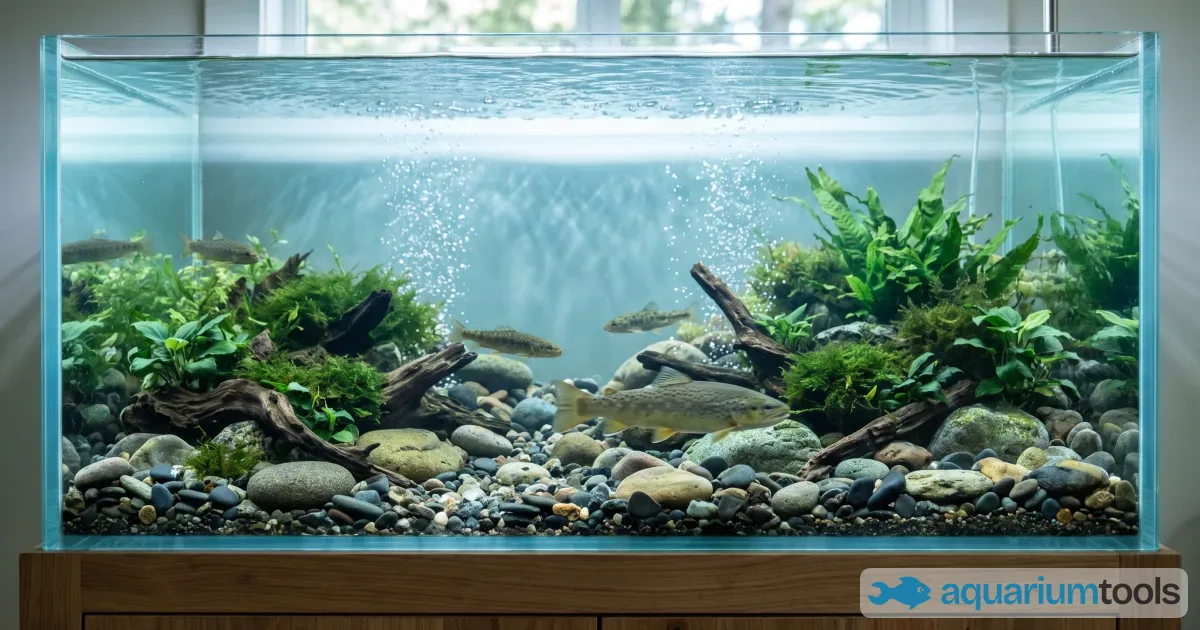
While most aquarists dream of tropical scenes filled with colorful shrimp and Amazonian fish, there is a fascinating world much closer to us that almost always goes ignored: that of our own streams. Cool, oxygenated brooks, pebbles polished by the current, small native species with surprising behaviors. Setting up a European stream biotope means telling the story of nature at home inside an aquarium, with an original and educational approach that deserves far more attention.
In this article we look at how to set up an aquarium of this kind, from the water characteristics to the decor, all the way to the suitable species and, crucially, the regulations to follow.
The Water: Cool, Moving and Rich in Oxygen
The first major difference compared to tropical aquariums concerns temperature. European streams are cold or cool environments: in many brooks the water stays below 18 °C even in summer. A well-managed stream aquarium typically operates between 12 and 20 °C, with seasonal fluctuations that reproduce the natural cycle.
This calls for a rethink of the equipment: often a heater is not needed, but the opposite may be required, namely keeping the tank cool during the hot months. A cool room, a surface fan or a small chiller can make all the difference for the animals' well-being.
The other key parameters are:
- High oxygenation: flowing waters are naturally saturated with oxygen. Good surface movement and generous filtration are essential.
- Clean water low in nitrogen compounds: stream species are sensitive to pollution. It is best to oversize the filtration and keep up constant maintenance.
- Hardness and pH: these vary greatly depending on the geology of the watercourse. In many European streams the water is moderately to distinctly hard, with a neutral or slightly alkaline pH, but there are softer, slightly acidic mountain brooks.
The Decor: Gravel, Pebbles and Wood
The aesthetic of a stream is understated and natural, very different from the exuberance of a planted tropical aquarium. The goal is to recreate a believable river bed.
Substrate and Rocks
The ideal substrate combines gravel of various grain sizes and polished river pebbles, arranged naturally with coarser areas and small patches of sand where the water slows down. Rocks should be chosen inert (avoiding limestone ones if you want to keep the water soft) and can create nooks, shelters and small shaded zones much appreciated by territorial species such as gobies.
Wood and Vegetation
Submerged roots and branches complete the environment, offering hiding places. Vegetation in real streams is often scarce because of the current, but in the aquarium you can add hardy plants tolerant of cold and water movement, along with mosses that naturally colonize rocks and wood. A somewhat bare look is not a flaw: it is realism.
Simulating the Current
The current is the soul of this biotope. Rheophilic species (lovers of flowing water) need flow to swim, feed and stay healthy. To recreate it, adjustable wavemaker pumps are used, positioned so as to generate a directional flow along the tank, almost creating a sense of unidirectional current.
Some practical tips:
- Favor elongated tanks over tall ones: they better reproduce a stretch of stream.
- Combine the wavemaker pump with the filter to create zones of differing speed: areas of strong current and calm spots behind the rocks.
- Good surface movement promotes gas exchange and keeps dissolved oxygen high.
The Species: Small Native Jewels
The choice of inhabitants is the heart of the project. Many European species are lively, social and hardy, provided their needs for cold and oxygen are respected.
The Minnow (Phoxinus phoxinus)
It is perhaps the flagship species of this biotope. A small gregarious cyprinid, the minnow lives in large shoals in clear, flowing waters. In the aquarium it displays fascinating social behavior and, during the breeding season, the males take on surprising colors. It should always be kept in a large group, in cool, well-oxygenated tanks.
The Stream Goby
Freshwater gobies are bottom-dwelling fish whose behavior is well worth observing: territorial, curious, they dart among the pebbles and defend small burrows. They are ideal for populating the lower zone of the tank and coexist well with surface and mid-water species. They require nooks and shelters among the rocks.
The Bullhead and Other Bottom Fish
In many mountain streams lives the bullhead (Cottus gobio), a camouflaged fish closely tied to cold, clean and highly oxygenated waters. It is a demanding species, suited to those who can guarantee optimal conditions. Its local protection status should nonetheless be verified, since several populations are protected.
An Important Note on the Pumpkinseed Sunfish
The pumpkinseed sunfish (Lepomis gibbosus) is often mentioned among the fish of our watercourses, but it is in fact a non-native species of North American origin, introduced and now widespread in Europe. It is considered invasive and harmful to native ecosystems. For this reason, in a project that aims to showcase native fauna, it is not the most consistent choice, and in many contexts it is subject to specific restrictions.
Regulations: A Step Not to Be Ignored
This is the most delicate aspect and must be approached seriously. Collecting fish in the wild and keeping native fauna is regulated, and the rules vary from country to country and often from region to region.
- Collecting in the wild: many species are protected or subject to restrictions. Capture may require specific permits or be entirely prohibited. Do not improvise: check with the competent authorities.
- Protected species: some native fish cannot be kept in an aquarium under any circumstances.
- Invasive species: European and national legislation prohibits or severely limits the keeping, transport and release of species considered invasive. Release into the wild is always to be ruled out, even for native specimens bred in captivity.
- Purchasing: whenever possible, opt for specimens of legal, traceable origin, avoiding unauthorized collection.
The golden rule: get informed before you start. A native biotope makes sense only if it respects the ecosystems it intends to celebrate.
Why It's Worth a Try
Setting up a European stream in a tank is a different experience: fewer flashy colors, more authenticity. You observe natural behaviors, get to know species living just a few kilometers from home and develop a concrete ecological awareness.
It is also a stimulating technical challenge: managing low temperatures, recreating the current, keeping the water crystal clear. Those who take it on discover a side of aquarium keeping that is little explored yet deeply rewarding, capable of turning the aquarium into a small window onto the streams of our continent.
Keep reading
Lake Tanganyika biotope: sand, shells and unusual cichlids
A guide to the Lake Tanganyika biotope: alkaline, hard water parameters, typical rock and shell setups, and the fascinating behaviour of Shell Dweller cichlids.
Congo River Biotope: An Underrated African Ecosystem
Discover the Congo basin biotope: acidic, tinted waters, submerged wood, dwarf cichlids, Congo tetras and catfish. A practical guide to recreating it in your aquarium.
Lake Malawi Biotope: Rocks, Cichlids and Hard Water
A practical guide to recreating the Lake Malawi environment in your aquarium: alkaline, hard water, a rockscape with caves, pale sand and a selection of Mbuna and Peacock cichlids, with the rules for managing aggression and stocking.
All material on this site is protected by copyright. Partial or total copying and republishing without authorization is not allowed.
Comments
Join the conversation
Create a free account to leave a comment. It only takes a minute and you'll come right back here.
No comments yet. Be the first to share your experience.