William T. Innes: the pioneer of American aquarium keeping
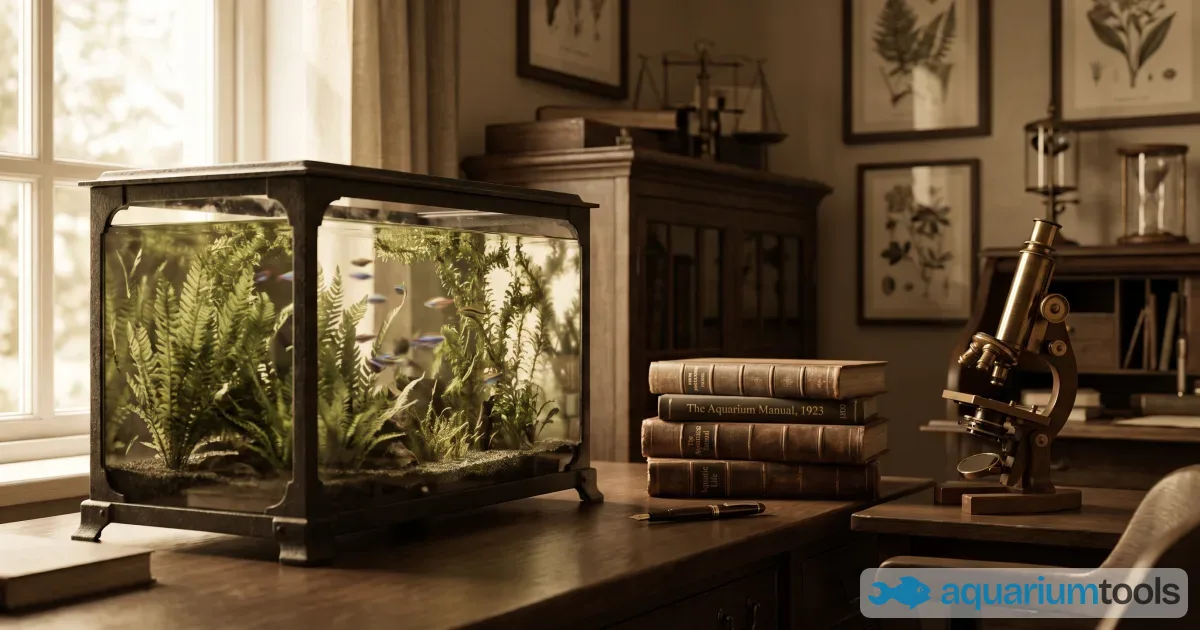
When we walk into an aquarium shop today and find shelves full of manuals, specialised magazines and guides to caring for tropical fish, we rarely think about who, almost a century ago, made all of this possible. Among the figures who most contributed to giving dignity and structure to the aquarium hobby in the United States, the name of William T. Innes stands out: a publisher, printer and passionate naturalist who managed to combine technical expertise, a love of fish and a talent for popularisation.
A Philadelphia publisher with a passion for fish
William T. Innes was born in 1874 in Philadelphia, the city where he built his professional career in the printing and publishing industry. By training he was a man of the printing trade, and this expertise proved decisive: it allowed him to personally oversee the graphic and photographic quality of his publications, an aspect that was anything but minor in an age when clear images of tropical fish were a rarity.
His passion for aquarium keeping did not arise as a simple occasional curiosity, but turned into a long-term cultural project. Innes understood, before many others, that the hobby needed reliable tools: accurate texts, faithful illustrations and verified practical information, capable of guiding both the beginner and the experienced breeder.
"Exotic Aquarium Fishes": the manual that set the standard
The work that established Innes as an international point of reference was Exotic Aquarium Fishes, first published in 1935. The volume quickly became one of the most consulted and reprinted manuals in the history of English-language aquarium keeping, going through numerous editions over the following decades.
The book's success was no accident. Innes managed to combine several elements in a single text:
- clear and orderly descriptions of the tropical species then known in the aquarium hobby;
- practical guidance on the care, feeding and breeding of fish;
- basic notions on managing the aquarium, from plants to setup;
- a carefully curated set of illustrations, the fruit of his sensibility as a publisher.
For generations of enthusiasts, this manual represented the gateway to the hobby: a source considered authoritative, able to speak an accessible language without giving up rigour. In a period when reliable information was fragmentary and often unreliable, a text of this kind filled a real gap.
The magazine "The Aquarium" and periodical popularisation
Alongside his work as an author and book publisher, Innes was also a leading figure in the periodical publishing dedicated to aquarium keeping. He founded the magazine The Aquarium, a publication that in the 1930s helped create a community of readers around up-to-date content, practical experiences and news about species.
The role of the magazine was as important as that of the books, perhaps even more so on a social level. A periodical publication, in fact, keeps the dialogue between enthusiasts alive, gathers the accounts of breeders, gives space to local clubs and creates a sense of belonging. In this way, aquarium keeping gradually ceased to be an isolated and individual practice and became a shared phenomenon, with common references and a recognisable culture.
From an individual hobby to organised aquarium keeping
Innes's historical contribution should be read precisely in this light: he did not simply write about fish, but gave the hobby the tools to organise itself. The availability of reliable manuals and quality periodical press fostered the birth and consolidation of a structured amateur aquarium keeping, made up of informed enthusiasts able to compare notes on a common basis.
The first half of the twentieth century was a crucial period for the spread of tropical fish keeping in the United States. The importation of exotic species, advances in the management of heated aquariums and the growing availability of equipment made the hobby accessible to an ever-wider audience. In this context, Innes's editorial work acted as a cultural glue, transforming a niche passion into a widespread movement.
A name linked to the neon tetra
The recognition of Innes's prestige in the scientific and amateur world is also attested by a detail that many enthusiasts still remember today: one of the most famous aquarium fish, the neon tetra, bears a specific name dedicated to him. The species, now known as Paracheirodon innesi, was scientifically described in 1936 by the ichthyologist George S. Myers, who chose the epithet "innesi" in honour of William T. Innes himself.
This link between one of the fish most loved by aquarists and the name of a publisher and populariser is almost symbolic: it unites the scientific dimension of classification with the popular dimension of the hobby, exactly the bridge that Innes sought to build through his work.
The legacy of a populariser
William T. Innes died in 1969, but his influence extended well beyond his lifetime. His manuals continued to be reprinted and consulted, and the model of popularisation he had helped define - rigorous information, careful images, dialogue with the community - remains valid to this day.
His figure reminds us of an important principle for anyone approaching aquarium keeping: the quality of information makes the difference. Before being a matter of equipment or rare species, a well-managed aquarium is born of knowledge. Innes had understood this and had made it his life's mission, helping to transform a private passion into a shared culture.
For today's aquarist, retracing the history of figures like his is not just an exercise in memory: it is a way to understand how the good practices we take for granted came about, and to appreciate the value of a hobby that, even before being technique, is a passion founded on knowledge.
Sources
- Encyclopaedic entry "William T. Innes" and related entries on Wikipedia (English and Italian language versions).
- Entry "Neon tetra" / Paracheirodon innesi on Wikipedia and reference ichthyological data sheets (Myers description, 1936).
- Bibliographic references to the work Exotic Aquarium Fishes (W. T. Innes, first edition 1935) and its subsequent reprints.
- Historical materials on the magazine The Aquarium and on the spread of aquarium keeping in the United States in the first half of the twentieth century.
Keep reading
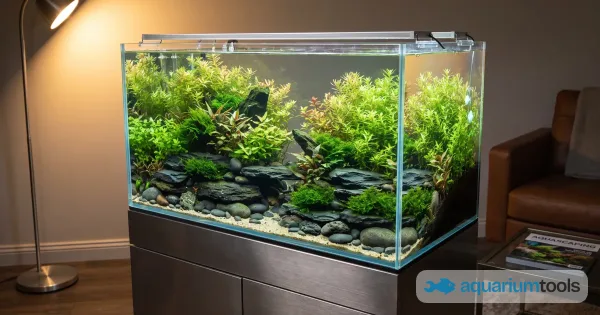
George Farmer: aquascaper and educator between past and present
A portrait of George Farmer, the British aquascaper known for his planted aquariums and his intense educational work spanning magazines, videos and workshops. A profile covering style, community and educational content.
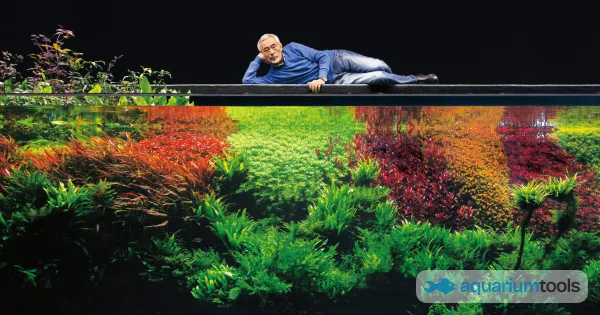
Takashi Amano: the father of modern aquascaping
The story of Takashi Amano, the Japanese photographer and aquarist who turned the aquarium into an art form, founding ADA and giving birth to the Nature Aquarium style.
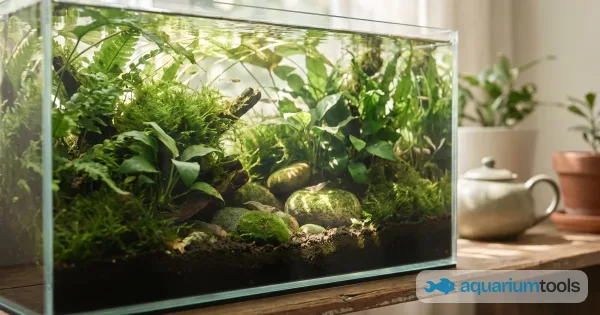
Diana Walstad and the Natural Method for the Planted Aquarium
A portrait of Diana Walstad, the American microbiologist and author who popularized the 'low-tech' approach to the planted aquarium based on biological balance, organic substrate and doing without injected CO2.
All material on this site is protected by copyright. Partial or total copying and republishing without authorization is not allowed.
Comments
Join the conversation
Create a free account to leave a comment. It only takes a minute and you'll come right back here.
No comments yet. Be the first to share your experience.