Keeping Caridina and Neocaridina Shrimp: A Complete Beginner's Guide
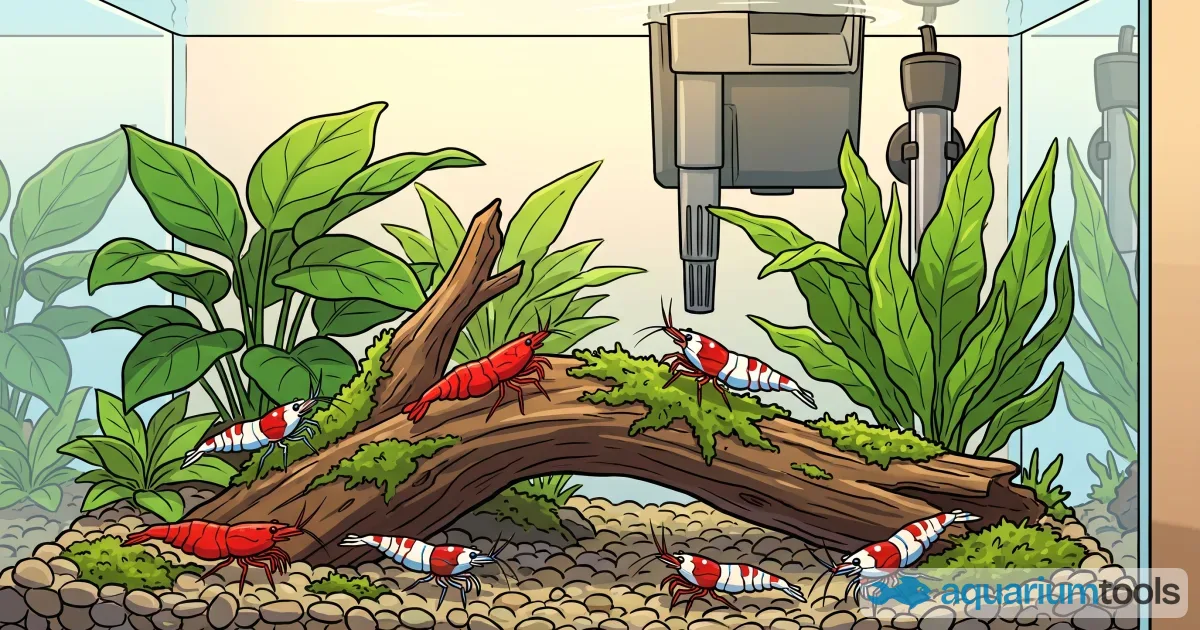
The charm of shrimp in the aquarium
Freshwater shrimp have earned a special place in the hearts of aquarists around the world. Small, hard-working and surprisingly colourful, they combine business with pleasure: on one hand they are tireless cleaners that consume algae, food residue and organic detritus, on the other they are genuine collector's items, available in a colour range that spans from bright red to deep blue, all the way to the refined white-and-red patterns.
Whether you are setting up your first nano-aquarium or want to specialise in selected strains, this guide will walk you through it step by step. The good news? With a little attention to the parameters, shrimp are rewarding guests and relatively simple to keep.
Neocaridina vs Caridina: the key differences
The first decision concerns the genus. Neocaridina and Caridina look similar at a glance, but they have different needs that determine their level of difficulty.
Neocaridina: the choice for getting started
Neocaridina davidi, including the famous Red Cherry, are extremely hardy and tolerant. They thrive in neutral to slightly alkaline water and cope well with a wide range of conditions.
- pH: 6.5 - 7.8
- Hardness (GH): 6 - 12 dGH
- Carbonate hardness (KH): 2 - 8 dKH
- Temperature: 20 - 26 °C
They are ideal for those taking their first steps: they forgive small mistakes and breed with ease.
Caridina: elegance and precision
Caridina, such as the refined Crystal Red (Caridina cantonensis), require soft, acidic water and are far more sensitive to variations. They are not impossible, but they demand consistency.
- pH: 5.8 - 6.8
- Hardness (GH): 4 - 6 dGH
- Carbonate hardness (KH): 0 - 2 dKH
- Temperature: 20 - 24 °C
An important tip: do not mix Neocaridina and Caridina from the same colour group that can interbreed, and remember that the parameters required by the two genera are often incompatible in the same tank.
Setting up the freshwater nano-reef
A well-designed aquarium drastically reduces problems. Even a 20-30 litre tank can house a happy colony, as long as it is mature and stable.
Active substrate or inert substrate?
The choice of substrate depends on your guests:
- Inert substrate (gravel or neutral sand): perfect for Neocaridina, which love water with a certain hardness. Cheap and simple to manage.
- Active substrate (technical soil that lowers the pH): indispensable for Caridina, since it acidifies the water and keeps the parameters stable. It has a limited lifespan and needs to be replaced when it exhausts its buffering capacity.
Mosses and shelters: the secret to success
Mosses are the most valuable element in a shrimp tank. Java Moss (Taxiphyllum barbieri) offers enormous surfaces on which biofilm develops, the main source of natural food, and it creates safe refuges for freshly moulted specimens or for the newborns.
Complement the moss with other hiding places: driftwood, catappa leaves, alder cones, ceramic tubes and plants such as Anubias or Java fern. More shelters mean less stressed shrimp, more intense colours and more frequent breeding.
Water quality and feeding
Shrimp are sensitive organisms: water quality makes the difference between a colony that thrives and one that declines.
Watch out for copper and nitrates
Copper is highly toxic to crustaceans, even in traces. Avoid plant fertilisers containing copper and always read the labels of medications: many fish antiparasitics are lethal to shrimp. Also pay attention to domestic copper piping.
Nitrates should be kept low, ideally below 20 mg/l. Ammonia and nitrites must be at zero: for this reason it is essential to introduce the shrimp only into a fully matured tank, with the nitrogen cycle well established (wait at least 4-6 weeks).
Water changes and stability
Small, frequent changes are better than large, sudden ones. Replace 10-20% of the water per week, pouring slowly to avoid swings in temperature or parameters. Use a specific remineraliser (GH+ or GH/KH+) to guarantee constant hardness, especially if you start from RO water.
A balanced diet and calcium for moulting
Shrimp feed mainly on biofilm and algae, but a varied diet enhances colours and vitality. Offer small amounts, avoiding overfeeding, which pollutes the water.
- Specific shrimp foods (plant-based)
- Blanched vegetables: spinach, courgette, catappa leaf
- Occasional protein sources for growth
- Calcium supplements for a healthy moult of the exoskeleton
Calcium is essential: during growth shrimp periodically shed their carapace, and a deficiency can cause difficult or fatal moults. An adequate GH and targeted supplements ensure sturdy shells.
Breeding and protecting the young
Neocaridina breeding is often spontaneous when conditions are good. Mature females carry the eggs under their abdomen (they are said to be ovigerous or "berried") for about 3-4 weeks, after which fully formed miniature shrimp hatch.
How to stimulate breeding
- Maintain stable parameters and a temperature around 23-25 °C
- Ensure a good ratio between males and females
- Offer a varied diet rich in biofilm
- Minimise stress with plenty of shelters
Protecting the newborns
The young are tiny and vulnerable, especially towards suction filters. The precautions are simple but decisive:
- Cover the filter intake with a prefilter sponge or a fine-mesh stocking
- Prefer sponge filters, safe and rich in biofilm to graze on
- Keep moss carpets where the newborns can hide and feed
Avoid housing predatory fish in the same tank: even small species can decimate a brood. If you are aiming for maximum yield, a tank dedicated solely to shrimp is the winning choice.
Conclusion
Keeping Caridina and Neocaridina is a fascinating experience within everyone's reach. Start with the hardy Neocaridina to gain confidence, take care of parameter stability, provide moss and shelters in abundance and pay attention to copper, nitrates and calcium. With a little patience you will see your colony grow, colour up and breed: a small living ecosystem that repays every bit of care. Happy shrimp keeping!
All material on this site is protected by copyright. Partial or total copying and republishing without authorization is not allowed.
Comments
Join the conversation
Create a free account to leave a comment. It only takes a minute and you'll come right back here.
No comments yet. Be the first to share your experience.