A Varied Diet for Aquarium Fish: Beyond Flakes
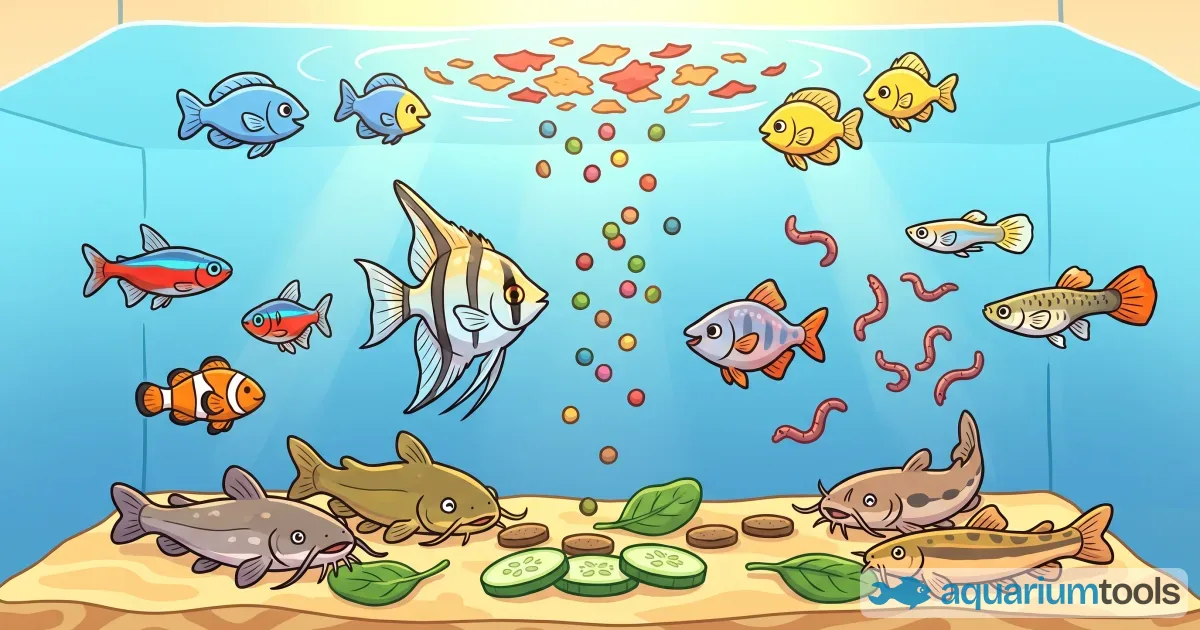
Many aquariums start with the best intentions but get stuck on a habit that is as common as it is risky: feeding fish exclusively with flake food, day after day. A monotonous diet is never a complete diet. Over time it can lead to malnutrition, a weakened immune system, dull colours and, at the opposite extreme, to obesity and liver problems caused by excess fat and overfeeding.
In the wild, fish consume an enormous range of foods: algae, small invertebrates, plant debris, insect larvae. Recreating this variety in the tank is not a hobbyist's quirk, but a genuine matter of animal welfare. Let's see how to build a balanced menu starting from the categories of food available.
The food categories: pros and cons
Dry food: flakes, pellets and bottom wafers
Dry food is the practical foundation of feeding. It is convenient, has a long shelf life and is often formulated with balanced vitamins and minerals. Flakes float and are ideal for surface and mid-water fish; pellets sink slowly and suit different species depending on their grain size; bottom wafers are designed for bottom-dwelling fish such as corydoras and loricariids.
The drawbacks? Quality varies greatly: some cheap products contain too many fillers and few high-value ingredients. Moreover, however complete it may be, dry food does not stimulate natural hunting behaviours and, if given in excess, degrades quickly and pollutes the water. It should be considered a mainstay, not the entire diet.
Freeze-dried and frozen
These foods bring the tank closer to natural food while keeping practicality and safety. The most widespread options are:
- Chironomus (red mosquito larvae): very palatable and rich in protein, excellent as a supplement but not as an exclusive food because of their high protein content.
- Brine shrimp (Artemia salina): excellent for stimulating appetite and growth, digestible and also useful for tiny fry in the form of nauplii.
- Daphnia (water fleas): light and rich in fibre, with a mild natural laxative effect that promotes intestinal regularity.
Frozen food preserves nutrients better than freeze-dried and should be thawed in a little tank water before feeding. Freeze-dried food is lighter and more storable, but tends to absorb water in the stomach: it is best to rehydrate it before offering it, to reduce the risk of bloating and digestive problems.
Live food
Live brine shrimp, daphnia, mosquito larvae and small annelids represent the peak of dietary variety. Live food activates the predatory instinct, keeps fish active and responsive, and contributes to more intense colouration thanks to natural pigments. It is especially valuable for conditioning breeders before spawning.
Be careful, however, about the source: live food collected in natural environments can carry parasites and pathogens. It is better to rely on controlled home cultures (such as brine shrimp hatched at home) or on trustworthy suppliers.
Vegetable supplements
Many aquarium species are omnivorous or distinctly herbivorous and need fibre and plant components. Blanched vegetables such as courgettes, shelled peas and spinach can be secured with a special clip or a weight. Spirulina, available in flakes, tablets or powder, is a valuable supplement: rich in plant proteins and pigments, it supports the immune system and brightens colours.
Peas, in particular, are a classic remedy for constipation in fish thanks to the laxative effect of their fibre. Vegetables not eaten within a few hours should be removed to prevent them from rotting.
Planning the weekly menu
The key is rotation. Here is an example routine for a typical community aquarium with omnivorous fish. Always adapt it to the species you keep.
| Day | Feeding |
|---|---|
| Monday | Quality flakes or pellets |
| Tuesday | Chironomus or brine shrimp (frozen) |
| Wednesday | Flakes with spirulina |
| Thursday | Vegetable supplement (courgette or peas) |
| Friday | Daphnia or live food |
| Saturday | Pellets or bottom wafers |
| Sunday | Fasting |
The weekly fasting day is not cruelty, quite the opposite: it helps the digestive system empty completely, reduces the risk of intestinal blockages and improves water quality. Healthy adult fish tolerate it without any problem.
Mistakes to avoid
Overfeeding
This is the most common and most damaging mistake. Fish have small stomachs and, in the wild, do not always find abundant food. The practical rule is to offer only the amount that is consumed in two or three minutes, once or twice a day. Uneaten excess food falls to the bottom, decomposes and fuels spikes of ammonia and nitrite.
Intestinal blockage
Diets too high in protein and low in fibre, combined with unrehydrated dry food, can cause constipation and bloating. It is a frequent problem in stocky-bodied fish such as goldfish and many cichlids. Prevention comes through variety, rehydration of freeze-dried food and the regular inclusion of daphnia and peas.
Water pollution
Every food residue is a source of pollution. Never leave excess vegetables or live food beyond the time needed, and siphon the substrate regularly. Careful management of feeding is, in fact, half the work of keeping water values stable.
In summary
A healthy diet for aquarium fish is built on variety: a base of quality dry food, supplemented with protein-rich frozen or live foods, plant components for herbivorous and omnivorous species, and one weekly fasting day. Always observe your fish: appetite, behaviour and colours are the most reliable indicators of a well-structured diet. Moving beyond the habit of flakes alone is the first, great step towards healthier, longer-lived and more vital animals.
All material on this site is protected by copyright. Partial or total copying and republishing without authorization is not allowed.
Comments
Join the conversation
Create a free account to leave a comment. It only takes a minute and you'll come right back here.
No comments yet. Be the first to share your experience.