How to set up a freshwater aquarium: the step-by-step guide
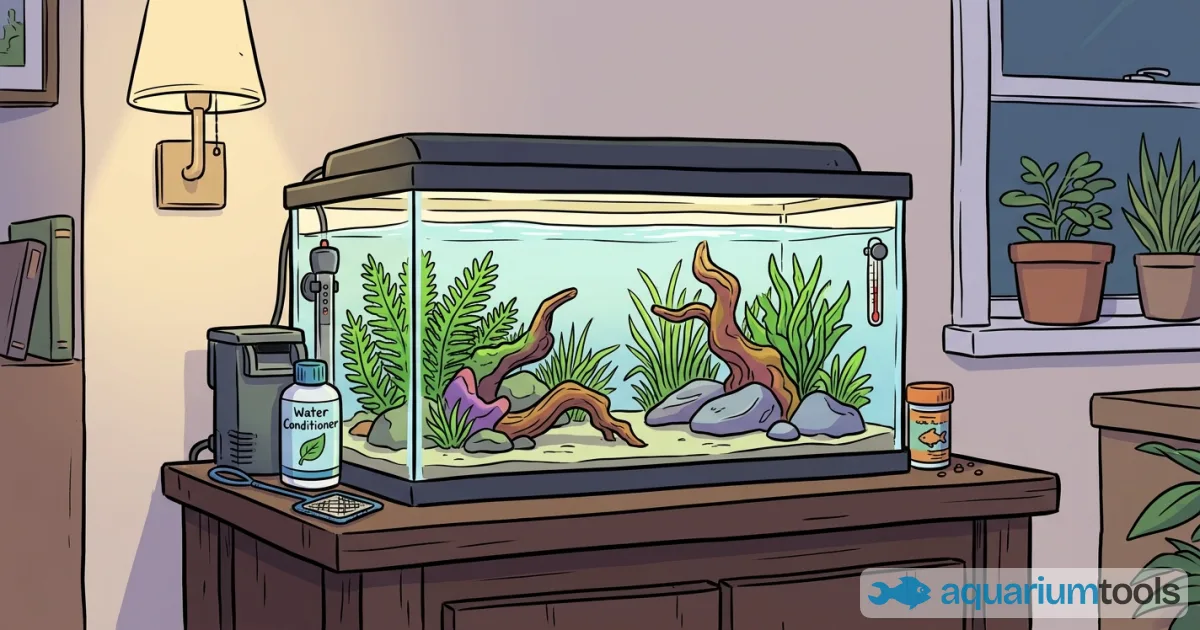
Setting up your first aquarium is an exciting experience, but it's also the moment when the most common mistakes are made. The good news is that just a few rules, applied with a little patience, are enough to get off to the right start. In this guide I'll walk you through it step by step, with a particular focus on the most important and most underestimated point: the nitrogen cycle, that is, the reason why you can't add fish on day one.
1. Choosing the right tank
The first counterintuitive piece of advice: don't start too small. A 60-litre tank or larger is much easier to manage than a 20-litre nano aquarium. The reason is simple: more water means more stability. In a large volume, temperature and chemical values change slowly, forgiving the small mistakes of a beginner. In a tiny tank, on the other hand, it takes very little to cause dangerous swings.
Choose an aquarium with a regular (rectangular) shape, which offers more surface area for oxygen exchange and more usable space for the fish. Make sure you already have the essential kit: a filter, a heater with thermostat, a thermometer, lighting and a good water conditioner to neutralise the chlorine in tap water.
2. Positioning and support
Before filling it, think about where to put it. One litre of water weighs one kilogram: a furnished 100-litre tank easily exceeds 120 kg. You need a sturdy, perfectly level stand. Avoid direct sunlight (it encourages algae) and noisy passageways or areas with temperature swings, such as near windows, radiators or doors.
3. Substrate, decor and water
Rinse the substrate (gravel or sand) under running water until it runs clear, then spread it over the glass to a thickness of about 4–6 cm. If you plan to use live plants, consider a fertilising substrate under the gravel: plants are your allies right from the start.
Arrange rocks and wood, then fill slowly by pouring the water onto a saucer or a bag so you don't dig into the substrate. Add the water conditioner, switch on the filter and the heater (set it to about 24–26 °C for most community fish) and let everything start running.
4. The heart of it all: the nitrogen cycle
Here is the point that makes the difference between success and failure. When a fish lives and eats, it produces ammonia, a highly toxic substance. In a mature aquarium, two families of beneficial bacteria take care of breaking it down:
- A first group transforms ammonia into nitrites (which are also very toxic).
- A second group transforms nitrites into nitrates, which are far less dangerous and which you then remove with regular water changes.
The problem is that these bacteria are not present in a new tank: they have to colonise the filter and the substrate, and that takes weeks. Adding fish straight away means exposing them to ammonia and nitrites, with almost always fatal consequences. This is the infamous "new tank syndrome".
5. Why you should wait about 30 days
Cycling is the period during which you grow the bacterial colony before introducing the fish. To do this you need a source of ammonia: the simplest and safest method is fishless cycling, that is, dosing small amounts of pure ammonia (without surfactants) or adding a pinch of food that releases ammonia as it decays.
From this point on, a drop-based test kit becomes essential for measuring ammonia, nitrites and nitrates. You'll see a precise sequence:
- Ammonia rises first.
- Then nitrites appear, while ammonia drops.
- Finally nitrites crash to zero and nitrates appear.
When ammonia and nitrites remain steadily at 0 within 24 hours, the tank is mature. This usually happens around the 30-day mark, sometimes a little longer. You can speed up the process with a quality bacterial starter or, even better, with a bit of "used" filter media taken from an already established aquarium belonging to a trusted friend.
Golden rule: don't watch the calendar, watch the tests. The tank is ready when the values say so, not when it "looks" ready.
6. Adding your first fish, gradually
At last, here we are. Do a 30–40% water change to lower the nitrates, then introduce a few fish, hardy ones suited to your water values. Don't stock the tank all at once: the bacterial colony needs to adapt gradually to the new organic load.
To add them, float the bag for 15 minutes to equalise the temperature, then add a little of your own water to the bag every 5–10 minutes for a few cycles. Finally, scoop the fish out with a net, avoiding pouring the shop water into the tank.
In the following weeks, keep testing ammonia and nitrites: if they rise again, wait before adding more fish. Space out your additions by about ten days each, feed sparingly and do weekly water changes of 20–30%.
In summary
A generous tank, stable positioning, clean substrate, the filter running and – above all – patience during cycling. If you respect the nitrogen cycle, you'll avoid most problems and start off with a healthy, long-lasting aquarium. Don't rush: the time spent waiting is the best investment for your future fish.
All material on this site is protected by copyright. Partial or total copying and republishing without authorization is not allowed.
Comments
Join the conversation
Create a free account to leave a comment. It only takes a minute and you'll come right back here.
No comments yet. Be the first to share your experience.